
Causes Cauliflower Ear
Causes cauliflower ear. Learn the real causes of cauliflower ear, how an auricular hematoma forms, and what grapplers can do to treat and prevent the deformity.
Written by BJJ Academy Finder Editorial Team
At national-champion level, auricular hematoma has been reported in 96% of Finnish martial artists, while cauliflower ear affected 84% of the men studied, according to StatPearls' clinical review of auricular hematoma. That finding reframes the question “what causes cauliflower ear?” It isn't a mark of experience, and it doesn't come from one inevitable hard round. It usually starts with an ear injury that produces trapped blood, followed by missed or incomplete treatment.
For a BJJ athlete, the practical lesson is straightforward. Learn which mat situations shear the ear, recognize swelling before it hardens, stop adding pressure, and arrange medical evaluation quickly. Headgear helps, but the response after an injury often determines whether a temporary swelling becomes permanent cartilage scarring.
Table of Contents
- What Cauliflower Ear Really Is and Why Grapplers Care
- The Biology Behind a Missed Ear Injury
- Common Causes and Risk Factors on the BJJ Mat
- First Aid and Medical Treatment Options
- Prevention Through Headgear, Technique, and Gym Culture
- When to See a Doctor and Recovery Expectations
- A Practical Recap for Training Smart
What Cauliflower Ear Really Is and Why Grapplers Care
Cauliflower ear is the visible end point of an auricular hematoma cascade. A blunt hit, fold, scrape, or grinding exchange can separate the skin and its supporting tissue from the cartilage underneath. Blood then collects in that new space. If the pocket remains, it can interfere with the cartilage's nourishment and eventually leave the ear thickened, uneven, and permanently reshaped. StatPearls explains the injury mechanism and the progression toward cartilage necrosis and fibrous overgrowth.
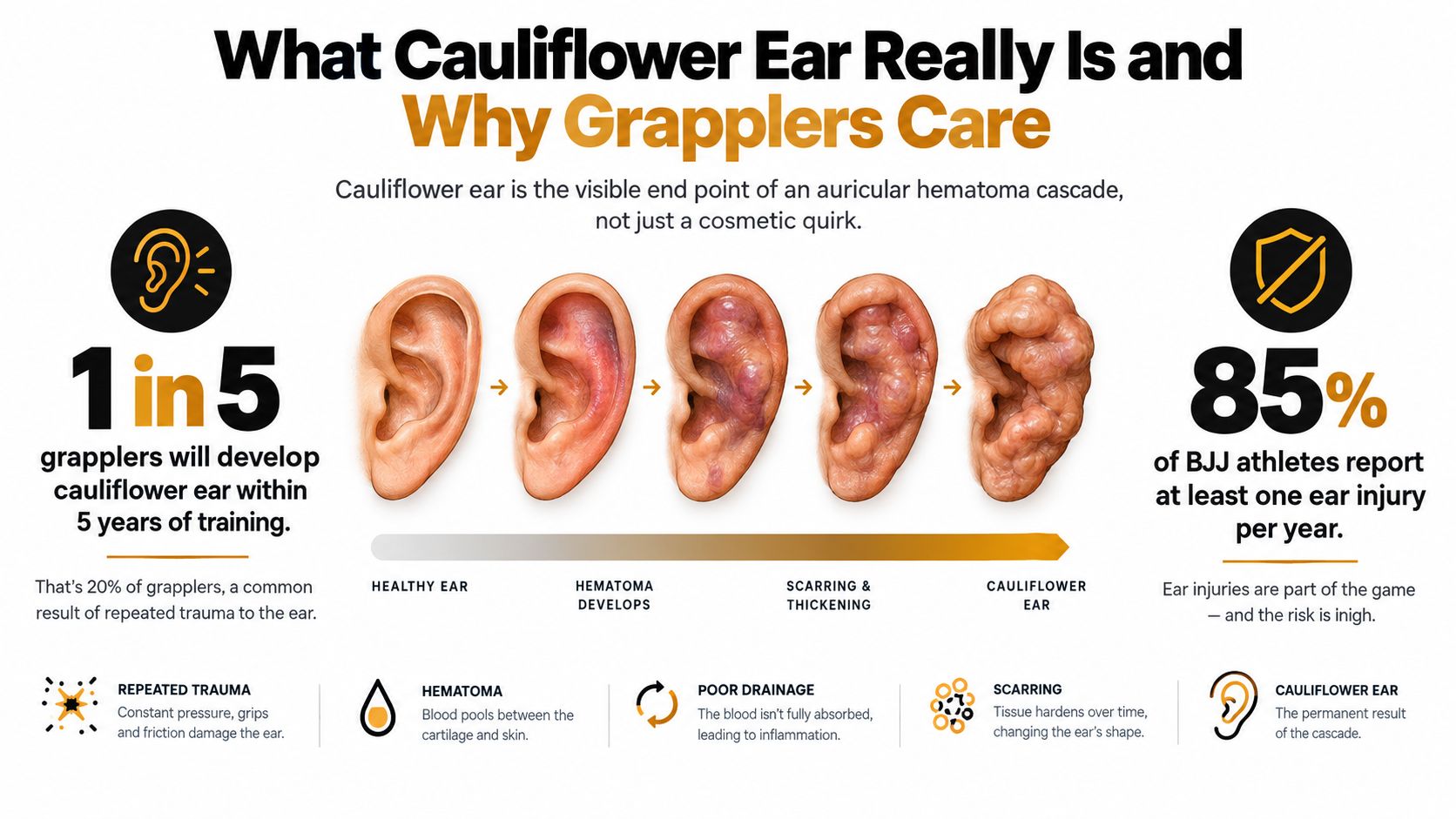
The ear doesn't need to be struck by a fist to suffer this damage. During BJJ, the outer ear may catch on a partner's shoulder, fold under a collar, drag across the mat during a scramble, or take concentrated pressure while you defend a pass. Each event can create the shearing force that starts the problem. Repeated contact raises concern because a partially healed ear can be injured again before the tissue has stabilized.
Mat-side rule: New swelling, warmth, tenderness, or a soft pocket after training deserves attention, even if the pain seems minor.
The useful window comes after the injury, not after the ear has already hardened. Clinical discussion continues to emphasize prompt drainage and effective compression because early management can minimize inflammation and reduce the chance of permanent deformity, as summarized in this recent review of auricular hematoma prevention and management. A physician can decide whether aspiration or incision and drainage is appropriate, then secure the ear so blood doesn't collect again.
If an old deformity already bothers you, a qualified facial-trauma or reconstructive specialist can discuss corrective options. Athena Plastic Surgery facial trauma care is one resource to review when you're researching specialist evaluation. The key distinction is simple: the original swelling may be preventable from becoming cauliflower ear, while established scarred cartilage may require a different treatment conversation.
The Biology Behind a Missed Ear Injury
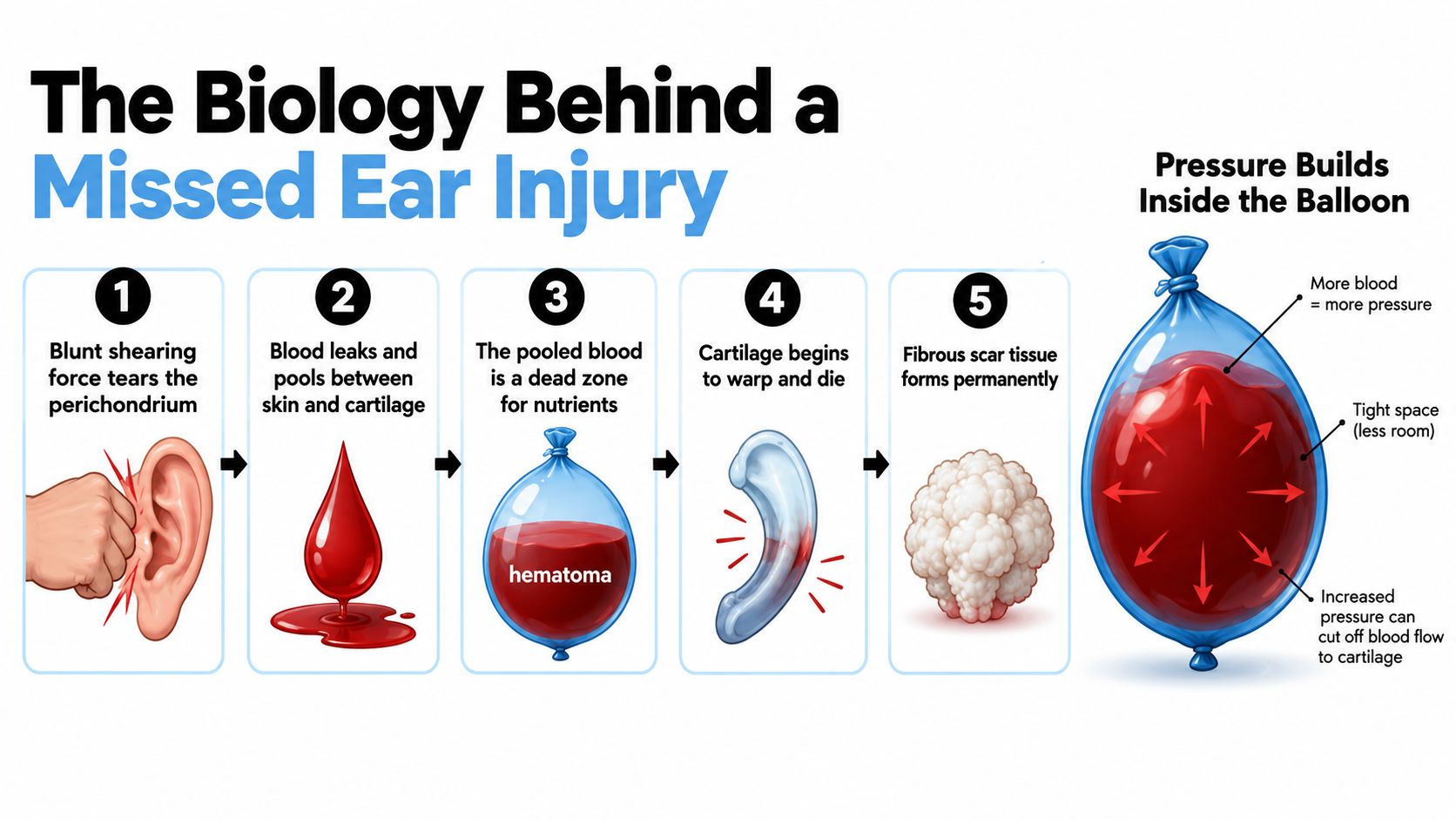
Think of the outer ear as a thin flexible structure with a firm cartilage framework. The cartilage gives the ear its shape, but it relies heavily on the surrounding perichondrium, a tissue lining that helps deliver nourishment. A hard grappling exchange can pull those layers apart in much the same way that squeezing and twisting a water balloon can make its contents shift away from the surface.
The cascade starts with separation
First, a blunt or shearing force bends, folds, or drags the ear. The perichondrium can lift away from the cartilage. This doesn't require a dramatic-looking collision. A shoulder pressing across a folded ear or a head landing awkwardly against the mat can be enough to create the separation.
Next, small damaged vessels leak blood into the space between the skin and cartilage. That collection is the auricular hematoma. The swelling may feel soft, fluctuant, or thickened, and the ear may look fuller on one side. The hit itself causes the initial injury, but the trapped collection creates the conditions for the later deformity.
Why the pocket changes cartilage
When blood sits between the perichondrium and cartilage, it disrupts the normal route for oxygen and nutrients. The cartilage has limited direct blood supply, so losing contact with its supporting lining matters. The trapped blood also sustains inflammation, making the area less likely to settle cleanly without intervention.
If the collection remains, the body begins organizing it. Fibroblasts produce connective tissue as part of healing, but the tissue forms in a disorganized way within the damaged space. The result is thickened, irregular tissue that pulls the ear into the familiar lumpy contour. The StatPearls review describes this progression as reduced blood flow followed by possible cartilage necrosis and fibrous overgrowth.
This is why the deformity doesn't come from the impact alone. The impact starts the hematoma. Leaving the separated layers apart, allowing more trauma, or failing to maintain compression after drainage gives the injury time to organize into scar. Early medical assessment targets that process before the tissue becomes firm and difficult to reshape.
Common Causes and Risk Factors on the BJJ Mat
BJJ creates a particular kind of ear exposure. The athlete's head is often part of the frame, base, or defensive structure, while the ear repeatedly meets bodies, clothing, and the mat. The common thread is shearing, folding, or grinding pressure, not just force measured as a single dramatic blow.
Where the ear gets caught
Grinding side control: When your ear is pinned between the mat and a partner's chest, shoulder, or forearm, small head movements can drag the skin across the cartilage. The pressure feels routine, but the ear is being compressed and rubbed at the same time.
Head-to-mat impacts: Takedowns, failed shots, and unsafe slams can drive the side of the head into the mat. Even when the athlete avoids a true slam, a fast snap-down or awkward roll can fold the ear sharply.
Gi chokes and collar ties: A collar can trap the ear against the neck or shoulder. As you turn, hand-fight, or defend a choke, the fabric may pull the ear while the opponent's body holds it in place.
No-gi scrambles: With less fabric between skin and opponent, an exposed ear can scrape across a shoulder, knee, forearm, or mat. Rapid transitions make it harder to notice the ear folding before the position changes.
Stacked passing pressure: During a stack, the head may drive toward the mat while the legs and hips force the neck into a compressed angle. If the ear is pinned, that pressure can become a shearing load rather than a simple push.
Repeated micro-trauma: Several ordinary rolls can matter when the ear never gets time to settle. Drilling without protection, competing without protective equipment, or returning while an existing swelling is present can add fresh force to vulnerable tissue.
Partner size and experience also affect exposure. A larger partner may create more concentrated pressure during a pass, while a newer grappler may scramble unpredictably or use the head as a brace. Neither factor guarantees cauliflower ear, but both can increase the opportunities for the ear to fold and drag.
This guide to how often you should train BJJ can help you think about training load alongside recovery. The important point isn't a universal schedule. It's whether your ears are repeatedly irritated without enough time, protection, or medical attention.
A visible hematoma that keeps enlarging, returns after treatment, or makes headgear painful should be assessed by a clinician. If you need specialist guidance about established ear damage, finding an ear surgeon in Georgia can be a useful starting point for researching appropriate care.
Watch the mechanics closely in training footage. The risky moment is often a brief fold followed by continued grinding, not a spectacular exchange that everyone notices.
First Aid and Medical Treatment Options
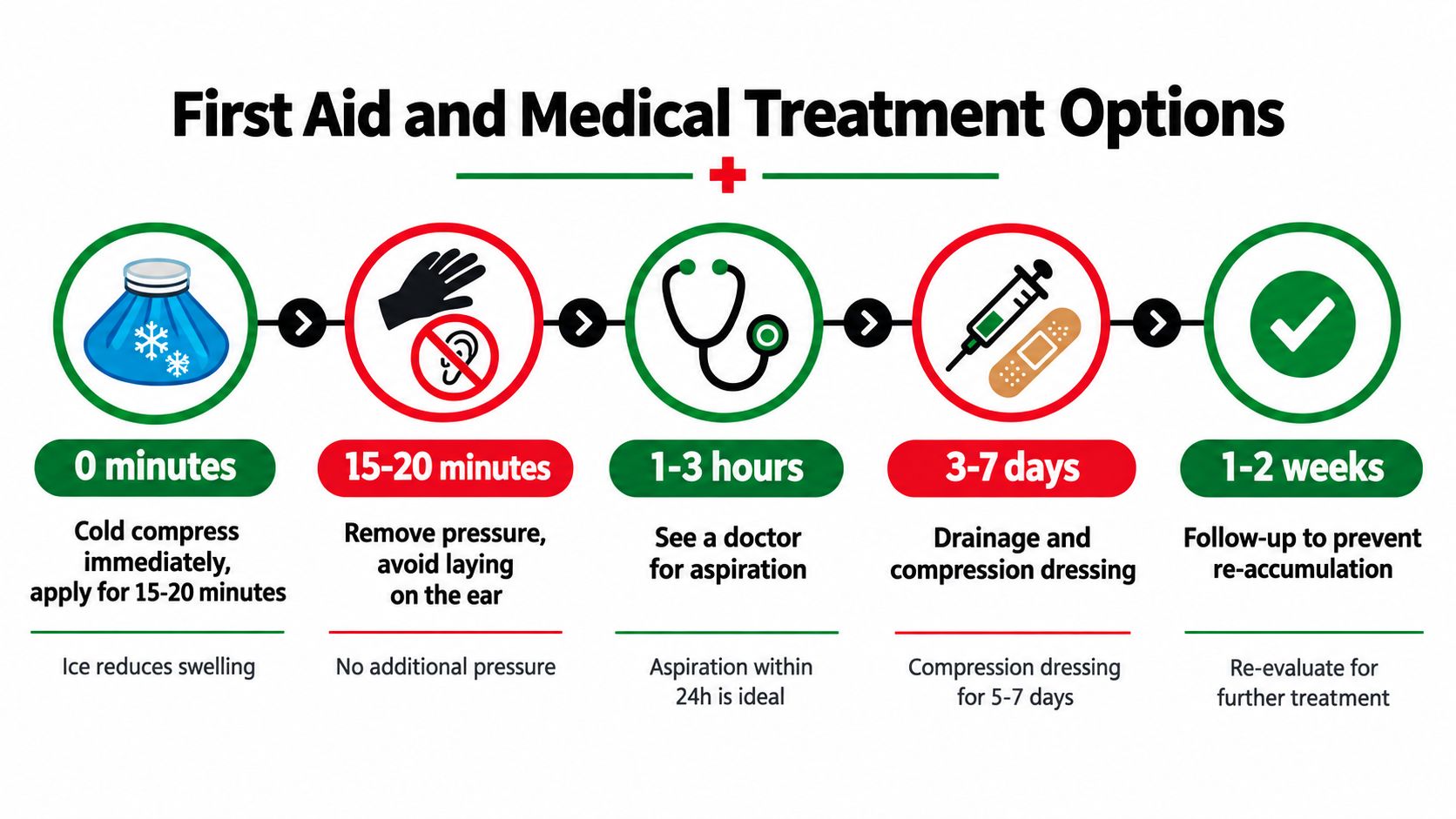
The first response should reduce additional trauma while you arrange professional evaluation. Stop rolling, remove pressure from the injured side, and use a cold compress wrapped in cloth. Short cold applications can help limit swelling, but ice won't remove a hematoma or reattach the separated tissue.
Don't puncture the ear with a household needle, squeeze it aggressively, or rely on a compression wrap you can't monitor. Home drainage can introduce infection, injure cartilage, or leave enough blood behind for the pocket to refill. Only a medical professional should decide how to drain it and how to secure the ear afterward.
What a clinician may do
A physician may use a needle to aspirate the pooled blood or create a small incision for drainage. The choice depends on the size, age, location, and character of the collection. Drainage alone isn't enough if the layers separate again, so the clinician may apply a compression dressing, splint, or specialized bolster that holds the ear's contour against the cartilage.
The treatment goal is mechanical as well as medical. Removing the collection clears the space, while compression keeps the skin and perichondrium in contact during healing. Follow-up matters because blood can reaccumulate, particularly if the athlete returns to pressure too soon.
- Cold compress: Use it as immediate supportive care, without placing hard pressure directly on the swollen area.
- Professional drainage: A clinician may aspirate or perform incision and drainage.
- Compression: A bolster, splint, or dressing helps prevent the pocket from reopening.
- Additional medication: A clinician may consider corticosteroid treatment for inflammation or antibiotics when infection risk is present.
- Established deformity: Otoplasty or another reconstructive procedure may be discussed when scarred cartilage has already changed the ear.
The most useful timing is early. Clinical reviews emphasize prompt management of the hematoma, and the clinical literature on auricular hematoma focuses on prevention of deformity through early drainage and appropriate compression. Don't wait for the swelling to become hard, painless, or obviously lumpy before asking for help. Once fibrous tissue organizes, treatment is no longer about emptying fluid.
Use this finger-taping guide for BJJ as a reminder of a broader training principle: protective care works best when it's planned before the next round, not improvised after an injury has worsened.
Prevention Through Headgear, Technique, and Gym Culture
Prevention works on three levels: reduce contact on the ear, improve the positions that expose it, and train in a room where people respond sensibly to injuries. No single habit removes every risk, but consistent choices can limit the shearing events that start an auricular hematoma.
Choose protection that stays put
Look for wrestling-style soft ear guards with coverage over the outer ear and enough structure to resist direct grinding. The fit should be secure during shots, inversions, and scrambles without creating a new pressure point. If the guard slides, the ear can fold underneath it. If it compresses too tightly, the equipment itself may irritate the tissue.
Wear it during live rounds, no-gi sessions, and wrestling-heavy drills, not only before competition. Clean the guard after training and let it dry fully. A dirty piece of equipment can place bacteria near irritated skin or small abrasions, which matters more if the ear has broken skin.
Change the moments that load the ear
Technique reduces unnecessary contact. Defend guillotines and D'Arce-style positions before your head becomes clamped against a shoulder. Frame early during stacked passing so your head doesn't remain driven into the mat. If a head-arm choke is dragging your ear across the floor, tap or reset rather than treating the discomfort as a test of toughness.
Breakfall practice also matters. A controlled fall distributes force through the back and limbs instead of making the side of the skull absorb the landing. During guard work, keep the head active and aligned rather than posting the ear directly on the mat. Small positional adjustments can protect the ear without sacrificing balance.
Read the academy's safety culture
A responsible gym makes it easy to pause when swelling appears. Coaches should notice a visibly swollen ear, support a partner change when a mismatch creates repeated head pressure, and teach intensity as a skill rather than a permanent setting. Mat-cleaning policies and clear expectations around open wounds also reduce avoidable infection concerns.
Before joining or changing schools, use this guide to choosing a BJJ gym and ask direct questions. Does the academy allow or encourage ear guards? Can you sit out while an injury is assessed? Do instructors correct reckless takedowns and uncontrolled pressure? The answers tell you whether the room supports a long training career.
When to See a Doctor and Recovery Expectations
Seek medical care when the ear develops a new soft swelling, expands quickly, or becomes increasingly painful. A warm, red ear may signal inflammation or infection, especially when the redness spreads. Fever, pus, foul-smelling drainage, or worsening tenderness shouldn't be managed by waiting for the next class.
Some symptoms need same-day evaluation rather than a routine appointment. These include hearing loss, ringing, dizziness, or balance changes after a direct strike or impact. A cut that passes through ear cartilage also deserves prompt professional assessment because cartilage has limited blood supply and infection can damage the structure quickly.
Match the symptom to the response
| Situation | Sensible next step |
|---|---|
| New swelling or a fluid-like pocket after training | Stop contact, protect the ear from pressure, and arrange prompt medical assessment |
| Rapid enlargement, severe throbbing pain, or marked warmth and redness | Seek urgent medical care |
| Fever, pus, foul drainage, hearing changes, dizziness, or balance problems | Seek same-day evaluation |
| Firm, older deformity without new symptoms | Schedule a consultation about reconstructive options |
After drainage, follow the treating clinician's instructions rather than a partner's return-to-training rule. Compression may remain in place for several days, and contact training should wait until the ear has been medically cleared and the dressing or bolster plan is complete. Returning too soon can refill the space and restart the same injury process.
Treated ears can remain structurally vulnerable, so recurrence monitoring matters. Check the ear after sessions, keep protective equipment fitted, and report renewed swelling quickly. Early intervention gives the ear a better chance of preserving its contour and function than delayed care, particularly once the collection begins to organize.
A Practical Recap for Training Smart
The answer to “what causes cauliflower ear?” is a chain, not a single event:
- Shearing force: The ear folds, scrapes, or gets compressed against a partner or the mat.
- Auricular hematoma: Blood collects between the skin and cartilage.
- Missed protection: Continued rolling, absent compression, or delayed evaluation lets the layers remain separated.
- Permanent change: Healing tissue and cartilage damage create a thickened, irregular ear.
Your mat checklist should stay simple:
- Inspect after training: Look for new swelling, warmth, tenderness, or a soft pocket.
- Stop adding trauma: Don't roll through an ear that has just swollen.
- Arrange professional care promptly: Drainage and compression are medical treatments, not home projects.
- Wear stable ear guards: Use them consistently during live grappling and scrambling.
- Improve head positioning: Keep the ear out of stacked pressure, uncontrolled falls, and prolonged grinding.
- Choose a thoughtful gym: Favor coaches who manage intensity, pair partners responsibly, and take injuries seriously.
Cauliflower ear isn't a badge you need to earn. It's preventable trauma that can affect appearance, comfort, and sometimes ear function. Protecting your ears lets you keep training without turning one neglected swelling into a permanent reminder of a round you could have paused.
If you're looking for a BJJ academy that fits your training goals and takes long-term athlete safety seriously, use Brazilian Jiu-Jitsu Academy Finder to search and compare academies by location. Review each gym's details, then contact the coaches and ask how they handle headgear, ear swelling, partner matching, and return-to-training decisions.
Share this article