
Kids' BJJ Gear Checklist for Every Season
Seasonal BJJ gear choices and care can make or break a kid’s comfort and safety on the mats.
Written by BJJ Academy Finder Editorial Team
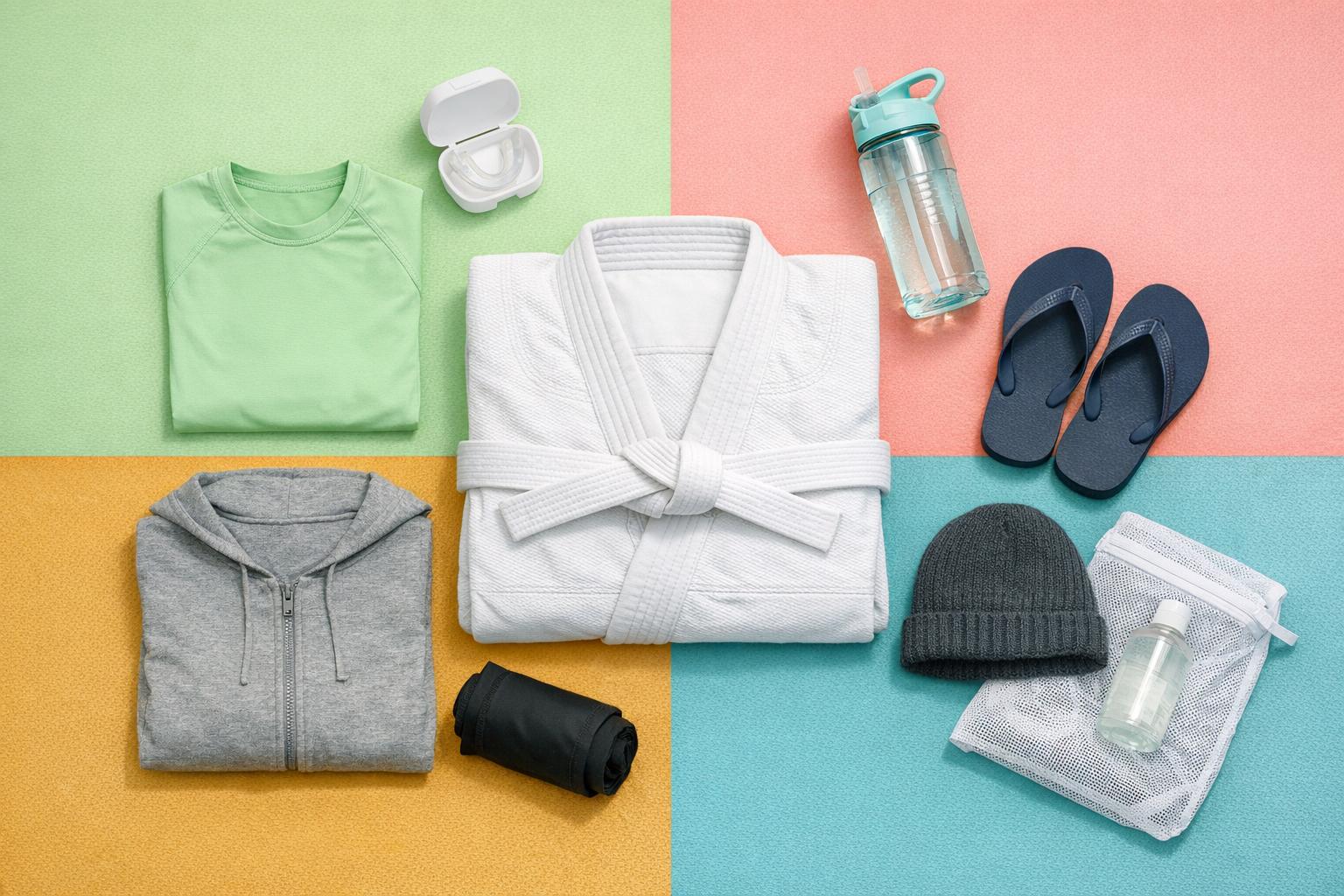
Kids' BJJ Gear Checklist for Every Season
Choosing the right Brazilian Jiu-Jitsu (BJJ) gear for kids depends on the season. Each season presents unique challenges, from staying cool in summer to keeping warm in winter. Here’s a quick breakdown of the essentials:
- Spring: Lightweight gis (350–450 GSM), moisture-wicking rash guards, and breathable shorts. Add a ventilated gym bag and anti-bacterial wipes for hygiene.
- Summer: Ultra-lightweight gis (275–350 GSM) with ripstop pants, cooling rash guards, and hydration tools. Stick to lighter colors for heat reflection.
- Fall: Medium-weight gis (450–550 GSM) and long-sleeve rash guards for warmth. Layer with compression spats under shorts for no-gi sessions.
- Winter: Heavyweight gis (550+ GSM) with thermal base layers like fleece-lined spats and merino wool rash guards. Keep gear dry and rotate outfits.
Proper maintenance is key. Always wash in cold water, air dry, and avoid leaving damp gear in bags to prevent bacteria growth. Owning 2–3 gis ensures consistent readiness.
With the right seasonal gear and care, your child can train comfortably year-round. Once they are equipped, you can find a BJJ gym nearby to start their journey.
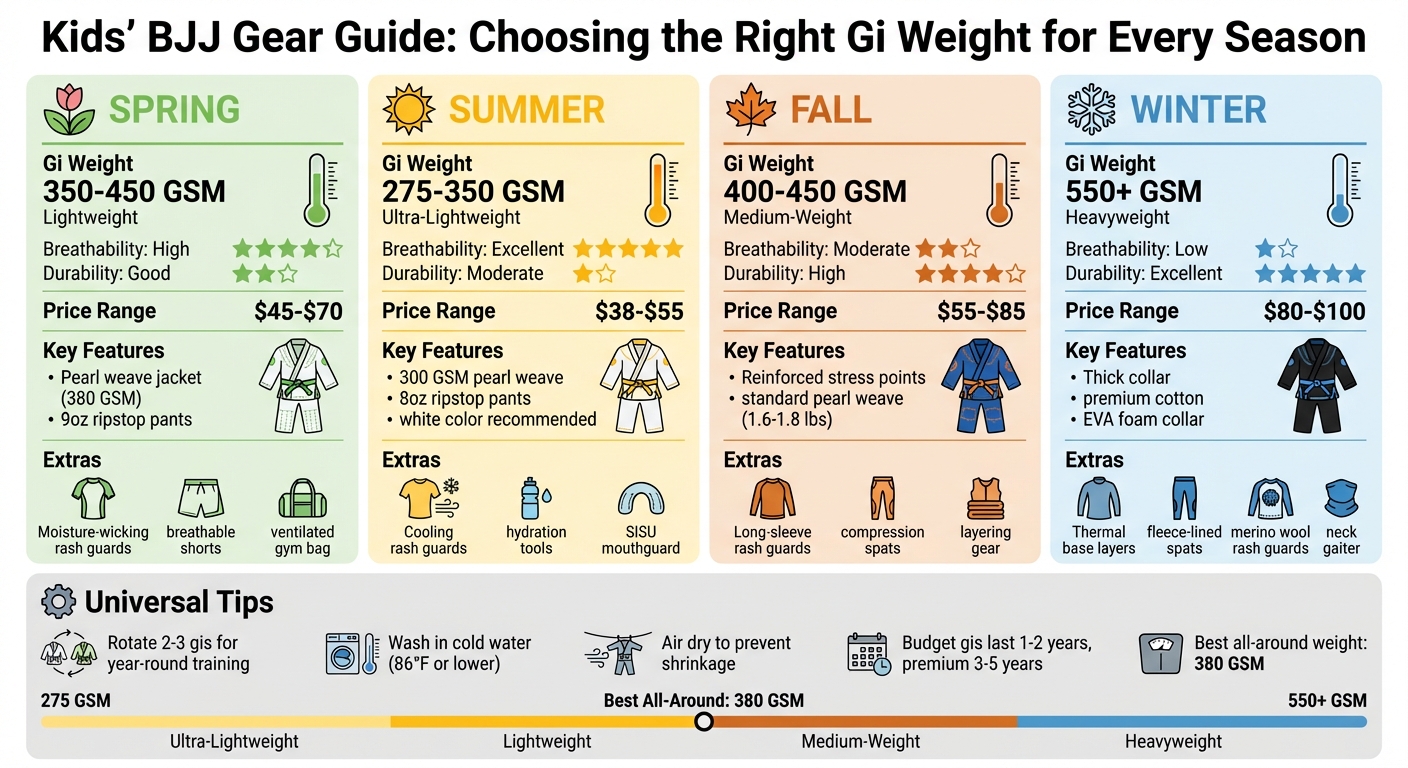
Kids BJJ Gi Weight Guide by Season: GSM Ratings and Price Comparison
Why Elite Sports Kids BJJ Gi is the First Choice of Parents for Kids in 2026

sbb-itb-d583f1e
Spring BJJ Gear Checklist
Spring's unpredictable weather calls for gear that keeps your child comfortable - whether it's during chilly mornings or intense training sessions. The right equipment ensures they stay focused on their practice without being weighed down or overheating.
Lightweight Gi for Spring Training
For spring training, a gi in the 350–450 GSM range strikes the perfect balance between durability and comfort. As Toro BJJ puts it:
Too heavy, and your child feels like they're dragging a backpack around the mats. Too light, and the gi won't survive more than a handful of rolls [4].
Toro BJJ’s youth gis, made with a 380 GSM pearl weave jacket and 9oz ripstop pants, are a great example of lightweight yet durable gear that can handle rigorous training [4].
When choosing a gi, consider one with EVA foam or rubberized collars. These dry much faster in spring’s humid conditions and maintain their structure better than fabric-filled collars. For instance, the Elite Sports Kids BJJ Gi, made from a 60% cotton/40% polyester blend, resists odors and remains lightweight. It boasts a 4.8/5 rating from over 2,000 Amazon reviewers [1]. Expect to pay $40–$50 for budget-friendly options, while premium brands like Fuji and Venum typically cost $60 or more [3].
Pro tip for sizing: If your child is between sizes, go a size up. Kids grow quickly, and even pre-shrunk gis can shrink slightly if washed in hot water [4]. To preserve the gi’s lightweight fibers and rubberized collar, always wash in cold water and hang it to dry [2] [4].
Once you’ve picked the perfect gi, complete the outfit with rash guards and shorts designed for spring training.
Breathable Rash Guards and Shorts
Rash guards are key for managing sweat and keeping your child warm during cool-downs. Look for moisture-wicking fabrics with 4-way stretch to ensure full mobility during rolls [7] [8].
The Toro Youth Ranked Rash Guards (priced between $19 and $50) offer moisture-wicking technology and come in both compression and loose-fit styles. If your child prefers more airflow, the loose-fit option is a solid choice. For a more budget-friendly alternative, the Sanabul Kids Essential Rash Guard is available for around $13 [7].
When it comes to shorts, skip bulky Velcro closures that can irritate training partners. Instead, choose options with elastic waistbands and drawstrings for a secure and comfortable fit. The Gym King Fight Division Combat Shorts (approximately $35) are made from breathable fabric designed to handle spring’s temperature swings [7].
Additional Spring Items
Round out your child’s gear with a few essential accessories to support their training routine.
- Reusable water bottle: Keep them hydrated during sessions.
- Athletic tape: Protect fingers during grip-heavy drills.
- Flip-flops or slides: Provide safe and hygienic transitions off the mats.
- Ventilated gym bag: Mesh compartments allow damp gear to air out, reducing the risk of mildew.
- Anti-bacterial body wipes: Perfect for quick cleanups after training.
- Clean change of clothes: Always have fresh clothes ready post-session.
- Nail clippers: Short nails prevent accidental scratches during practice.
With the right gear, your child will be ready to tackle spring training with confidence and comfort.
Summer BJJ Gear Checklist
Summer heat can make the mat feel like a furnace, turning training into a real endurance test. The right gear ensures your child stays cool, focused, and ready to train hard, even when the temperatures rise. Lightweight materials and smart choices make all the difference.
Ultra-Lightweight Gi Options
When the heat is on, a lightweight gi is non-negotiable. Look for summer gis in the 300–350 GSM range, which allow for better airflow and reduce moisture buildup. For example, the Combate Youth Pro Lite and FUJI Ultra Lite 300 both feature 300 GSM pearl weave jackets combined with 8 oz ripstop pants. These materials are designed to keep your young athlete cool without compromising on performance.
If you’re looking for something a bit sturdier, the Gameness Air Youth Gi 2.0 ($65.00) combines a 350 GSM jacket with 60/40 ripstop pants, striking a balance between durability and breathability. It’s earned a perfect 5.0/5 rating for good reason [9]. For families on a budget, the Twister Kids BJJ Gi is a solid choice at just $34.99. According to Twister Fight Wear:
With its lightweight material you won't experience the discomfort of overheating and you'll be able to train longer and push harder in competitions [11].
When it comes to color, white gis are your best bet for summer - they reflect heat better than darker options [12]. Pairing your gi with ripstop pants further enhances comfort by promoting faster drying and reducing moisture retention.
Cooling Accessories
A few extra items can make summer training far more bearable. Start with a moisture-wicking rash guard under the gi. This not only pulls sweat away from the skin but also minimizes friction during rolls [12] [6]. For mouthguards, thinner designs like SISU allow for easier breathing compared to bulkier models [6].
Hydration is another key factor. Encourage your child to drink water before, during, and after every session to stay properly hydrated [12] [13]. If possible, schedule training during cooler parts of the day, such as early mornings or late evenings, to avoid peak heat [12].
These small adjustments can make a big difference in keeping summer training sessions safe and effective.
Gear Storage for Hot Weather
Taking care of gear is just as important as choosing the right items. Avoid leaving gear in hot cars overnight, as heat and humidity can damage fabrics and encourage bacterial growth [2] [4]. Rotate at least two gis to ensure they dry completely between sessions [12].
After training, empty your gym bag immediately and follow proper washing guidelines to protect the lightweight fibers of summer gis [2] [4]. Brands like Braus Fight even offer mesh bags with their gis, which help with ventilated storage [10]. While air drying is ideal, avoid placing gear in direct sunlight for too long - it can fade colors and weaken the fabric [2].
Fall BJJ Gear Checklist
As the cooler weather rolls in, it's time to gear up for fall training. The key is finding equipment that keeps your child warm without compromising their ability to move freely. Fall is the perfect season to swap out those lightweight summer options for gear that can handle chilly mats while maintaining flexibility.
Medium-Weight Gi Recommendations
For fall training, medium-weight gis in the 450–550 GSM range hit the sweet spot between durability and flexibility. Standard pearl weave gis typically weigh between 1.6–1.8 lbs, while heavier double weaves can range from 2.2–2.5 lbs. A 450 GSM gi is a solid choice for daily practice, offering enough mobility and protection for grappling. However, if your child trains in a colder gym, a 550 GSM jacket might be a better option, providing extra warmth and sturdiness.
When shopping, look for reinforced areas at stress points like knees, collars, and cuffs - these spots take the most wear and tear during intense sessions. Kids' medium-weight gis usually range from $50 to $120, depending on quality. If your child is between sizes, consider sizing up to allow for growth and potential shrinkage. These features ensure the gi holds up and keeps your child comfortable through the season.
Layering with Rash Guards and Shorts
Long-sleeve rash guards are an excellent thermal base layer under the gi. They help keep your child warm while also protecting against mat burn. For added warmth, pick rash guards made from a polyester/Lycra blend. The ideal fabric ratio for these is 85% polyester and 15% spandex, providing both comfort and durability. Prices for kids' rash guards typically fall between $17 and $60.
"The rash guard also acts as a great base layer, providing warmth and boosting performance in wearers."
– Elite Sports
For no-gi sessions, layering spats (compression leggings) under grappling shorts is a smart move. Spats protect legs from cold mats and friction while allowing full mobility. Look for four-way stretch fabrics to ensure the layers don't restrict movement. Youth spats generally cost between $20 and $45, while performance shorts range from $30 to $60. It's a good idea to keep at least two sets of layering gear on hand. This way, your child always has a clean, dry set ready to go, especially since cooler, humid conditions can slow down drying times. A layered approach not only keeps your child warm but also ensures they're ready to train comfortably.
Hygiene and Maintenance Items
Once you've got the right gear, maintaining it properly is essential - especially during fall, when damp weather can encourage bacteria to thrive. Never leave sweaty gear sitting in gym bags or cars. Wash everything promptly after training, including belts, which can absorb sweat and bacteria just like gis.
"As with your gi, your belt is made of a porous fabric that collects sweat, and whatever may lie inside that sweat or on your training partner."
– Ryan, Performance Martial Arts Academy
For stubborn odors in thicker fall gear, try adding ½ cup of white vinegar to the wash cycle. Combining vinegar with baking soda can work wonders for eliminating deep-seated smells. Always wash gis in cold or cool water to prevent shrinkage and keep base layers elastic.
Lastly, equip your child's gym bag with a portable hygiene kit. Include antibacterial soap, hand sanitizer, wet wipes, anti-fungal spray, and nail clippers. To combat moisture and odor, toss in charcoal or silica gel packs and make it a habit to clean the gym bag weekly. These steps will help keep the gear fresh and ready for every session.
Winter BJJ Gear Checklist
When winter rolls around, it's essential to keep your child warm during training without restricting their movement. The right gear can turn chilly mats into a productive training ground, keeping your young athlete comfortable, safe, and focused.
Heavyweight Gi for Winter
For colder months, a mid-weight gi (around 450 GSM) strikes the perfect balance - providing warmth without compromising mobility. While lightweight gis (350–380 GSM) are common for kids, mid-weight options offer the extra insulation and durability needed during winter.
Take the Fuji All Around Kids BJJ Gi ($89.95), for example. Its thick collar and premium cotton blend help retain body heat, earning it a solid 4.8/5 rating from 933 reviews. Other great choices include the Novakik Batch 83, Venum Contender ($59.50), and Sanabul Future Legend ($44.99), all designed with robust, thick cotton for intense training sessions.
When shopping, look for gis with rubberized or EVA foam collars for added structure and warmth. If your child plans to wear thermal layers underneath, consider sizing up to maintain a full range of motion. To keep the heavier fabric in good condition and avoid shrinkage, wash in cold water and hang dry - especially important during winter's longer drying times.
Thermal Base Layers and Accessories
Thermal base layers are a must for keeping your child warm on cold mats. Long-sleeve rash guards made from midweight polyester/elastane blends or merino wool are ideal. Merino wool stands out for its natural moisture-wicking and antibacterial properties, a big plus when drying times are slower in winter. Avoid cotton, as it absorbs sweat and stays damp. Budget-friendly thermal sets for kids typically range from $10 to $20, while merino wool options can cost between $60 and $100.
Thermal compression pants (spats) are just as important. Look for snug, "gi-fit" styles with silicone or rubber grips on the waistband to prevent them from bunching or shifting during training. Highly rated options include the TELALEO Boys' Girls' Thermal Set (4.8/5 stars) and the ViCherub Kids' Fleece Lined Thermal Set (4.7/5 stars).
For added warmth, consider a microfleece neck gaiter. Not only does it help preserve core warmth between sessions, but it can also double as a face covering during chilly commutes. As with all thermal gear, wash these items in cold water and hang them to dry to maintain their elasticity and durability.
Winter Hydration and Safety Gear
Hydration remains critical, even in colder weather. A dependable water bottle ensures your child stays hydrated during training, despite the lower thirst signals that come with cooler temperatures.
Winter also calls for mouthguards that accommodate stiffer muscles. A basic "boil-and-bite" mouthguard costs around $14.00, but the SAFEJAWZ Mouthguard (4.4/5 stars) offers "Fluid Fit" technology and a slim profile to prevent gagging - perfect for winter training.
Since thicker winter gear takes longer to dry, owning multiple gis is a smart move to ensure your child always has a clean, dry uniform ready. Adding antibacterial soap and hand sanitizer to their gym bag - and encouraging a shower right after class - can further reduce the risk of skin infections, which are more common in close-contact sports.
With the right winter gear and a few extra precautions, your child can stay warm, safe, and ready to perform all season long.
Year-Round Gear Comparison Table
Choosing the right kids' BJJ gear means thinking about how fabric weight aligns with seasonal needs. A lightweight gi might be perfect for a sweltering July training session but leave your child freezing in January. On the flip side, a heavyweight gi could be too much for spring practices, leading to discomfort from overheating.
The table below highlights how different gi weights stack up across key factors like breathability, durability, and cost. This breakdown can help you make informed decisions based on your local climate and training schedule. Notice how fabric weight, measured in GSM (grams per square meter), directly affects these features.
| Gear Category | Fabric Weight (GSM) | Breathability | Durability | Recommended Season | Price Range |
|---|---|---|---|---|---|
| Ultra-Lightweight | 275 - 350 GSM | Excellent | Moderate | Summer | $38 - $55 |
| Lightweight | 350 - 380 GSM | High | Good | Spring | $45 - $70 |
| Medium-Weight | 400 - 450 GSM | Moderate | High | Fall | $55 - $85 |
| Heavyweight | 550+ GSM | Low | Excellent | Winter | $80 - $100 |
For year-round use, the 380 GSM range is a solid choice, especially when paired with quality accessories. A lightweight or medium-weight gi combined with rash guards for layering can handle most training conditions without stretching your budget.
When it comes to fabric, pearl weave strikes the best balance. It combines the breathability of single weave with the durability of double weave, making it a go-to option for kids' gis. For pants, look for 9oz to 10oz ripstop fabric - it’s tough against tears but still light enough to keep kids comfortable during intense training sessions.
Tips for Maintaining Seasonal Gear
Taking care of your seasonal gear is just as important as choosing the right items. Proper maintenance can ensure safety, hygiene, and durability, saving you both time and money in the long run.
Start by addressing your gear right after training. Never leave a sweat-soaked gi sitting in your gym bag overnight. As Elite Sports explains:
Never leave your dirt and sweat-drenched gi sit overnight in your BJJ bag - even if you are tired, wash your gi after the training session to prolong its lifespan [17].
Damp conditions are a breeding ground for bacteria, turning a simple wash into a fight against unpleasant odors and even skin infections like staph or ringworm.
When washing, stick to cold water - 86°F or lower - to avoid excessive shrinkage. Use a fragrance-free detergent and skip the fabric softener, which can trap bacteria by coating the fibers. Hayabusa Fight highlights:
The best way to clean a jiu-jitsu gi is to use cold water, which is as effective at getting your uniform clean but not as harsh - hot water will likely shrink your gi and damage fibers [17].
To protect patches and colors, turn your gi inside out before washing. Also, tie the drawstrings on your pants to keep them from slipping out during the cycle.
Air drying is key to extending the life of your gear. Machine drying can damage fibers and cause significant shrinkage. In warmer months, hang your gear in the shade - while sunlight kills bacteria, overexposure can fade colors. During cooler, more humid months, use a fan or place the gear at least three feet away from radiators to speed up the drying process [15] [16]. For heavier winter gis, drying might take 24 to 48 hours, so it’s a good idea to have 2 to 3 gis in rotation to ensure your child always has clean, dry gear ready [17].
Storage is just as important as cleaning. Keep your gear in a cool, dry, and well-ventilated space, using wide hangers. Avoid plastic bags or airtight containers, as they trap moisture and encourage mildew growth [14] [17]. Before storing off-season gear, wash it one last time and make sure it’s completely dry. For stubborn odors, pre-soak the gear in a mix of one part white vinegar to four parts cold water for 30 minutes. Inspect high-stress areas like collar seams, armpits, and knees for small rips, and patch them to prevent further damage [14].
Lastly, don’t overlook your belt. As RVCA points out:
Your jiu jitsu belt is exposed to the same bacteria as your gi - to keep your jiu jitsu belt in good condition, wash it every time you wash your gis [17].
With proper care, a budget gi can last 1 to 2 years, while a premium gi can hold up for 3 to 5 years [17]. These small maintenance habits go a long way in preserving your child’s training gear and ensuring it’s ready for every session.
Conclusion
Prepare your child for year-round BJJ training without breaking the bank. The secret lies in choosing the right gear for each season. During spring and summer, lightweight gis (350–450 GSM) help keep kids cool and agile, while mid-weight (450–550 GSM) or heavyweight gis (550+ GSM) provide the warmth and durability needed for fall and winter sessions [19]. By planning ahead and selecting the appropriate fabric weight, you can help your child focus on their techniques instead of dealing with discomfort.
Smart shopping can also keep costs manageable. Kids' BJJ gis typically range from $40 to $200 [18]. Opting for a size up (1–2 inches) ensures room for growth without compromising safety [4]. Owning 2–3 gis for rotation not only extends the life of each uniform but also saves money in the long run [2][19]. Before purchasing, check your academy's rules on gi colors and branding - most accept white, blue, or black, but some have specific requirements [5][18]. These thoughtful choices help maintain both your budget and your child’s performance.
Proper care is just as important. Washing gis in cold water (86°F or lower) and air drying prevents shrinkage and fiber damage, allowing budget gis to last 1–2 years and premium options up to 3–5 years [17].
Don’t forget the extras! Essentials like rash guards, custom-fitted mouthguards, and flip-flops enhance safety and extend the life of gear [4][18][19]. By aligning gear choices with seasonal needs and making a few strategic investments, your child can train comfortably and consistently throughout the year.
If you’re searching for a reputable academy to put all this gear to use, check out the Brazilian Jiu-Jitsu Gyms Directory (https://bjjacademyfinder.com). This platform connects families with trusted BJJ schools across the U.S., offering detailed insights on programs, instructor qualifications, and reviews to help you find the perfect training environment for your child.
FAQs
How do I pick the right gi size for a growing child?
To pick the right gi size for a child who’s still growing, focus on their height, weight, and how much they might grow soon. Size charts are a helpful tool to find the best match. If your child falls between sizes, it’s a good idea to go for a slightly larger size to give them room to grow. Also, check whether the gi is preshrunk - this ensures it won’t shrink too much after washing. A good fit should allow easy movement, sit comfortably, and leave some space for growth.
Do kids really need 2–3 gis for training year-round?
Kids typically don’t require 2–3 gis for training throughout the year. In most cases, a single, well-fitting, and durable gi is enough to handle regular practice sessions. That said, having a second gi can be handy - especially for those moments when the primary one is in the wash or needs a quick swap.
What’s the best way to stop gi and belt odors?
Keeping your gi and belt clean is crucial for hygiene and longevity. After every training session, wash them promptly in cold water with a mild, fragrance-free detergent. This helps prevent bacteria buildup and keeps odors at bay. If you can’t wash them right away, air them out instead of leaving them crumpled in a bag, which can trap moisture and encourage bacteria growth. Don’t forget your belt - it collects just as much bacteria as your gi and should be washed just as regularly.
Related articles
Share this article