
What to Expect in Your First BJJ Class
Beginner's guide to your first BJJ class: what to wear and bring, class structure, warm-ups, etiquette, and what to expect from rolling.
Written by BJJ Academy Finder Editorial Team
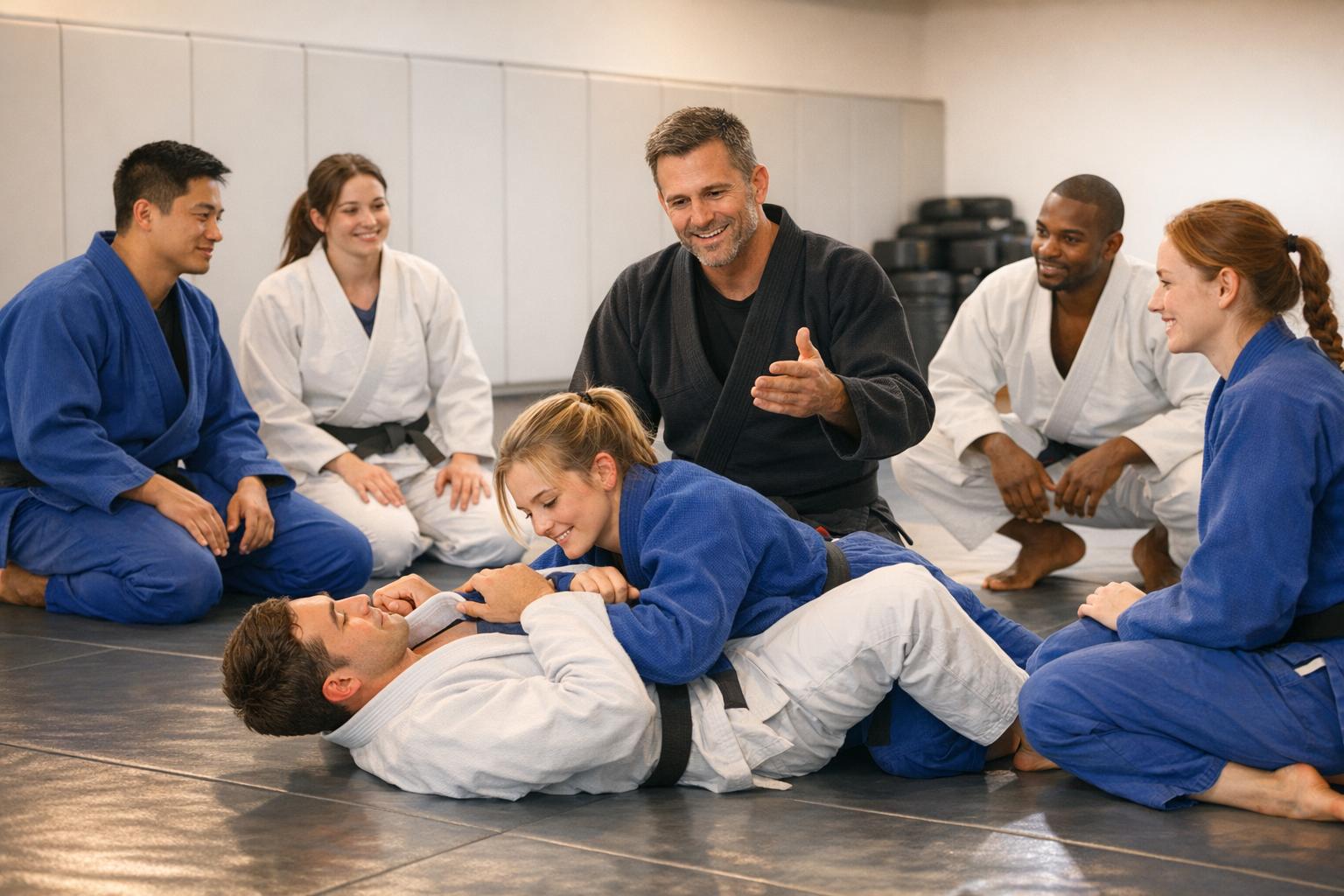
What to Expect in Your First BJJ Class
Your first Brazilian Jiu-Jitsu (BJJ) class can feel overwhelming, but it’s designed to be beginner-friendly. If you haven't already, find your perfect BJJ gym nearby to get started. Here’s a quick rundown of what to expect and how to prepare:
- What Happens: You'll start with a warm-up, learn basic movements (like shrimping), and practice simple techniques such as positional control and escapes. Sparring is usually optional for beginners.
- Class Length: Most sessions last 60–90 minutes, including warm-ups, technique demonstrations, and drills.
- What to Wear: Wear a fitted T-shirt or rash guard with grappling shorts or compression leggings. Avoid clothing with zippers or buttons.
- What to Bring: Essentials include a water bottle, flip-flops (for off-mat areas), and a mouthguard.
- Etiquette: Keep nails trimmed, remove jewelry, and respect your training partners by tapping if needed.
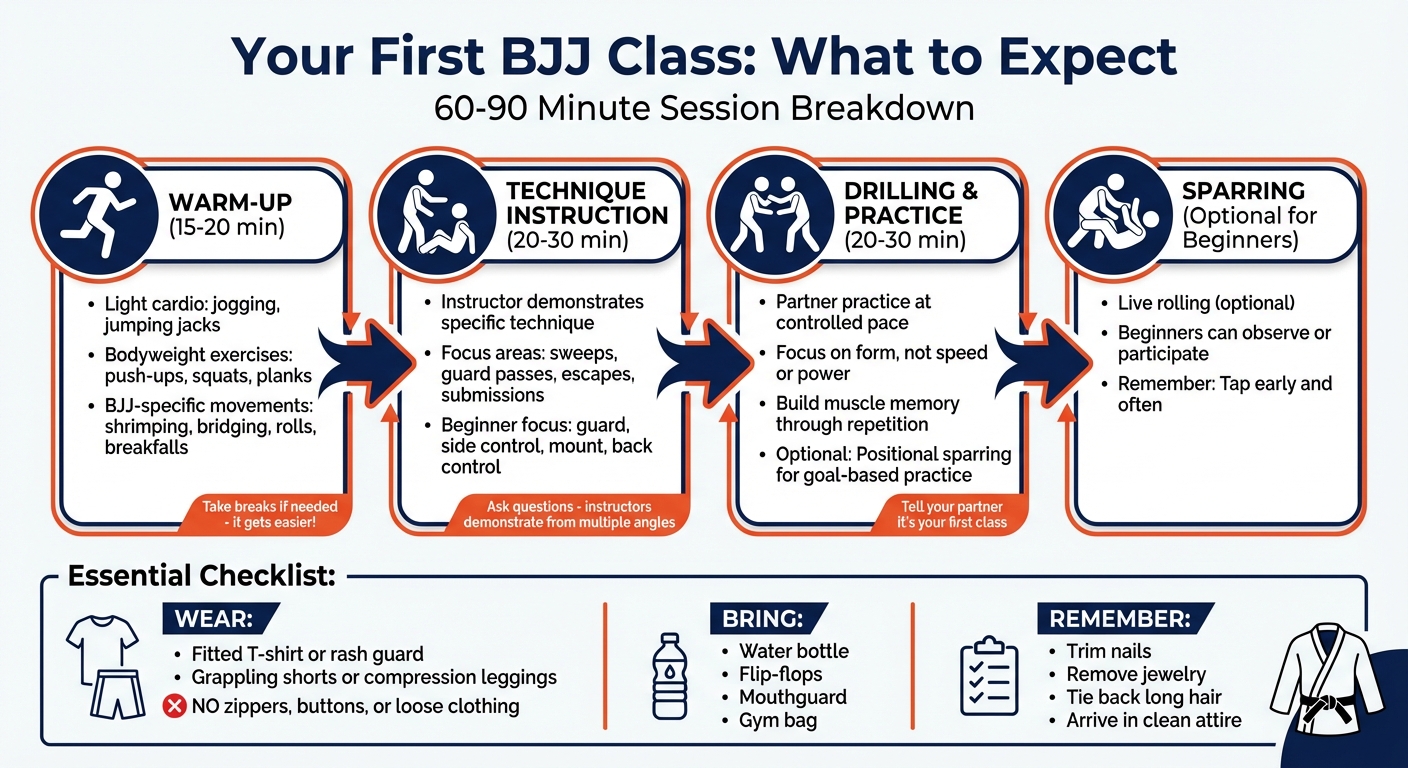
What to Expect in Your First BJJ Class: Complete Structure and Timeline
What to Bring and Wear
What to Wear to Your First Class
For your first class, skip the gi and stick to practical athletic wear. A fitted T-shirt or rash guard paired with grappling shorts or compression leggings works best. Steer clear of loose cotton shirts and any clothing with zippers, buttons, or other hardware that could hurt someone or damage the mats.
"Clothing should not have zippers or buttons, which can injure others and damage the mats." - Princeton BJJ
Also, consider wearing compression shorts or other athletic undergarments for added comfort and hygiene. Once you're dressed appropriately, make sure to pack the essentials for a smooth training session.
What to Bring
Here’s a quick checklist of items to bring along:
- A water bottle to stay hydrated
- Flip-flops for walking in off-mat areas
- A mouthguard for live drills
- A gym bag to keep your sweaty clothes separate
These basics will help you feel prepared and organized for your first class.
Hygiene and Safety Requirements
Good hygiene and safety practices are just as important as your gear. Always arrive in clean attire, and if you can, shower or use body wipes beforehand to keep the mats safe for everyone. Keep your nails trimmed and filed, remove any jewelry, and tie back long hair with soft ties. If you’re feeling unwell or have open wounds, it’s better to skip class until you’re fully recovered. These steps protect both you and your training partners.
sbb-itb-d583f1e
The Structure of a BJJ Class
Warm-Up Exercises
Every Brazilian Jiu-Jitsu (BJJ) class kicks off with a warm-up to get your muscles loose and your heart pumping. You’ll typically start with light exercises like jogging, jumping jacks, and bodyweight moves such as push-ups, squats, or planks. These exercises aren’t just about breaking a sweat - they’re about preparing your body for the challenges ahead.
But here’s where it gets interesting: the warm-up often includes BJJ-specific movements that might feel a bit awkward at first. You’ll practice moves like shrimping (hip escapes), bridging, forward and backward rolls, and breakfalls. These techniques teach you how to move effectively on the mat, fall safely, and recover without injury. Over time, these foundational movements will become second nature.
"These movements may feel awkward at first, but they're fundamental to how your body will move in BJJ. The goal is to get your body loose and ready, not to test your endurance." - Marcus Soares BJJ
If the warm-up feels too intense, take a moment to sit down and catch your breath. Then, jump back in when you’re ready. With each class, your coordination and stamina will improve. Once everyone’s warmed up, the instructor transitions to demonstrating techniques.
Technique Instruction
The next phase of class focuses on learning a specific technique. This could be anything from a sweep or guard pass to an escape or submission. The instructor breaks down the technique step by step, emphasizing leverage and positioning over brute strength.
Pay close attention and don’t hesitate to ask questions. Most instructors will demonstrate the technique multiple times from various angles, helping you see how each detail fits together. For beginners, the focus is often on foundational positions like the guard, side control, mount, and back control, as well as basic escapes from these positions.
Drilling and Positional Practice
After watching the demonstration, it’s time to put theory into practice. Drilling is where you and a partner repeatedly practice the technique, focusing on accuracy and proper form rather than speed or strength. This step is all about building muscle memory and fine-tuning the details.
"Drills are done at a controlled pace. It's not about speed or power - it's about learning the right movements and developing muscle memory." - Marcus Soares BJJ
Some classes also introduce positional sparring, a controlled exercise where you start in a specific position - like being under mount - and work toward a specific goal, such as escaping. This type of practice helps you apply techniques in a semi-live setting, bridging the gap between drilling and full sparring.
If it’s your first class, let your partner know so they can adjust their pace and offer guidance. And remember, if you ever feel uncomfortable, tap your partner or the mat immediately. Tapping is an essential safety tool, not a sign of failure.
BJJ Gym Etiquette and Culture
Basic Mat Rules
Stepping into a Brazilian Jiu-Jitsu (BJJ) academy means embracing a set of traditions that help maintain respect and safety. Start by acknowledging the mat with a small nod when stepping on or off, and ensure you’re prepared: keep your nails trimmed, remove any jewelry, and tie back long hair. These small habits create a clean and safe training space. If you arrive late, don’t just jump in - wait at the edge of the mat until the instructor signals for you to join.
One key rule to remember is never to walk barefoot off the mat. Always bring flip-flops or sandals to wear when heading to the restroom or common areas. This simple step prevents bacteria from being tracked back onto the mat, keeping the training surface hygienic for everyone.
Respect doesn’t stop there - it extends to how you conduct yourself during demonstrations and interactions with your training partners.
Following Instructions and Respecting Partners
Whenever the instructor demonstrates a technique, stop what you’re doing, stay quiet, and pay close attention. In BJJ, instructors are often addressed as "Coach" or "Professor" (the latter typically reserved for black belts).
"Instructors are referred to as the 'coach' or 'professor' in Brazilian Jiu Jitsu. Just in case you were wondering what to call the teacher. No matter where you go, coach or professor will be accepted pretty much anywhere."
When training with a partner, keep your energy controlled and match their pace. If it’s your first class, let them know - most experienced students are happy to guide beginners through the movements. Above all, respect the tap. If your partner taps, whether with their hand or verbally, release immediately. Similarly, if you feel discomfort or pressure, don’t hesitate to tap early and often.
"The sooner you see tapping as feedback rather than failure, and leave ego at the door, the faster you'll progress."
Finding the Right Gym
While etiquette is essential, finding the right training environment can make all the difference in your BJJ journey. Not every academy offers the same approach, especially for beginners. Some gyms prioritize teaching foundational techniques before allowing live sparring, while others may have specific policies about uniform colors or require branded gear.
To simplify your search, the Brazilian Jiu-Jitsu Gyms Directory (https://bjjacademyfinder.com) is a great resource. It allows you to search for academies by location, read reviews from other students, and explore details about each gym’s programs and instructors. This tool can help you find a gym that aligns with your learning style and goals, ensuring a welcoming and productive start to your BJJ experience.
What to Expect in Your First BJJ Class
Conclusion: Starting Your BJJ Journey
Walking into your first BJJ class can feel like stepping into a whirlwind. Feeling awkward, tapping out often, and struggling to keep up? Totally normal. No one - neither your instructors nor your teammates - expects you to master anything on day one. Their goal is simple: to help you learn and grow.
Those early stumbles are actually stepping stones. Progress in BJJ isn’t about how many submissions you land or how long you can spar without tapping. It’s about being better today than you were yesterday. As one instructor at Fusion BJJ wisely says, “I only compare myself to me, yesterday. Am I better than I was yesterday? That is the ONLY thing that really matters.” This mindset is the foundation for growth. Show up consistently, celebrate small victories (like lasting a little longer during a roll), and view every tap as a lesson rather than a loss.
The phrase “A Black Belt is a White Belt Who Never Quit” captures the heart of BJJ. Every black belt has faced the same frustrations you will, but they kept going. Often called "physical chess", BJJ tests your mind as much as your body. Each class builds on the last, and even when progress feels invisible, the supportive community around you knows exactly what you're experiencing. So, ask questions, leave your ego at the door, and trust the process.
If you're ready to take the next step, check out the Brazilian Jiu-Jitsu Gyms Directory to find a place to train and grow.
FAQs
What can I expect during my first rolling session in Brazilian Jiu-Jitsu?
Your first sparring session in Brazilian Jiu-Jitsu (BJJ) is usually designed to be a low-pressure, beginner-friendly experience. After warming up and going through a technique demonstration, your instructor will pair you with a partner - often someone more experienced who can help guide you through the process. During this session, you'll focus on practicing specific positions, like guard or side control, based on what you just learned. The emphasis is on building comfort and timing rather than competing, so the intensity remains light. If you ever feel stuck or overwhelmed, just tap, and the roll will stop immediately.
Safety and proper etiquette are essential. Keep your nails trimmed, maintain good hygiene, and communicate openly with your partner. Most schools treat this first roll as a chance for you to learn and experiment, giving you plenty of space to ask questions and try out moves at your own pace. You'll likely find your instructor and classmates cheering you on, creating a supportive environment that makes your introduction to BJJ sparring both enjoyable and stress-free.
How do I choose the best BJJ gym as a beginner?
Choosing the right Brazilian Jiu-Jitsu (BJJ) gym as a beginner is all about finding a place where you feel comfortable and supported. Start by thinking about practical details like location and class schedule. A gym that’s close to your home or workplace and offers classes at times that fit your routine will make it easier to stay consistent. Also, look for beginner-friendly programs that focus on the basics, and decide if you want to train in gi, no-gi, or both.
The gym’s culture and its instructors play a huge role in your experience. A welcoming, encouraging atmosphere and coaches who are knowledgeable, patient, and approachable can make learning much more enjoyable. Don’t overlook the facility either - clean mats, proper changing areas, and other amenities can have a big impact on your comfort. Finally, make sure the membership fees align with your budget.
If you’re looking for an easy way to compare options, the Brazilian Jiu-Jitsu Gyms Directory is a great resource. It lets you search for beginner-friendly academies across the U.S. based on location, class offerings, instructor qualifications, and reviews, helping you confidently pick the perfect gym for your first steps into BJJ.
What should I know about proper etiquette for my first BJJ class?
When stepping into your first Brazilian Jiu-Jitsu class, following proper etiquette can make the experience enjoyable for both you and your training partners.
Plan to arrive a little early - this gives you time to check in, change into clean gear, and introduce yourself to the instructor and fellow students. Hygiene plays a big role in martial arts training, so ensure your clothes are freshly washed, your nails are trimmed, and any jewelry or accessories are removed. If you have long hair, tie it back securely to keep it out of the way.
On the mats, respect is key. Pay attention to your instructor, tap out when needed, and keep your energy in check - overly aggressive behavior during drills or sparring is a no-go. If your gym provides equipment, handle it with care, and always clean up your area after class. A respectful and considerate attitude helps maintain a positive and welcoming atmosphere for everyone.
If you’re still searching for the right place to begin your journey, the Brazilian Jiu-Jitsu Gyms Directory can guide you to an academy that aligns with your goals and values good etiquette.
Related articles
Share this article