
5 Active Recovery Workouts for BJJ
Low-intensity walking, mobility drills, yoga flows, foam rolling, and breathing routines to reduce soreness, improve flexibility, and speed BJJ recovery.
Written by BJJ Academy Finder Editorial Team
5 Active Recovery Workouts for BJJ
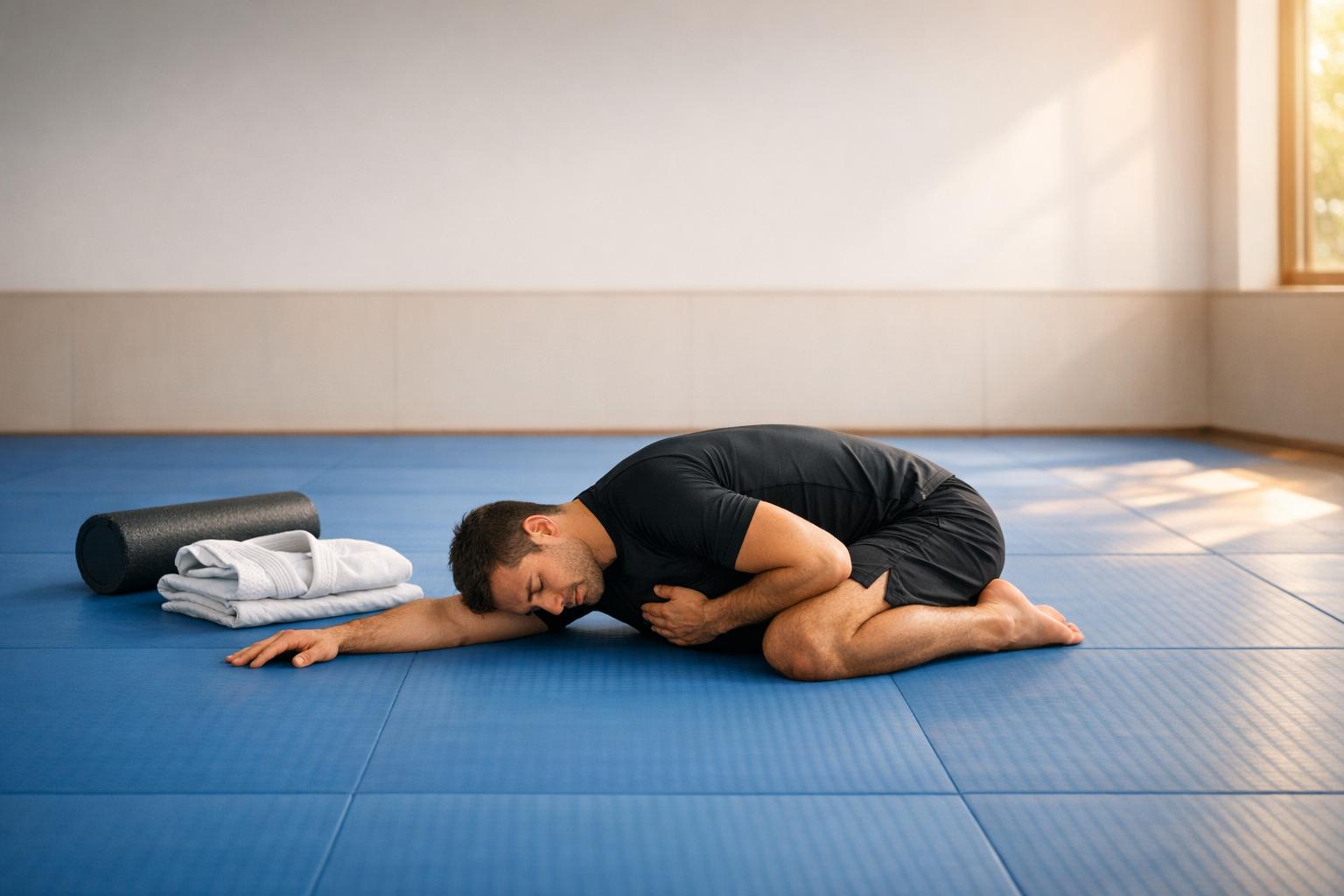
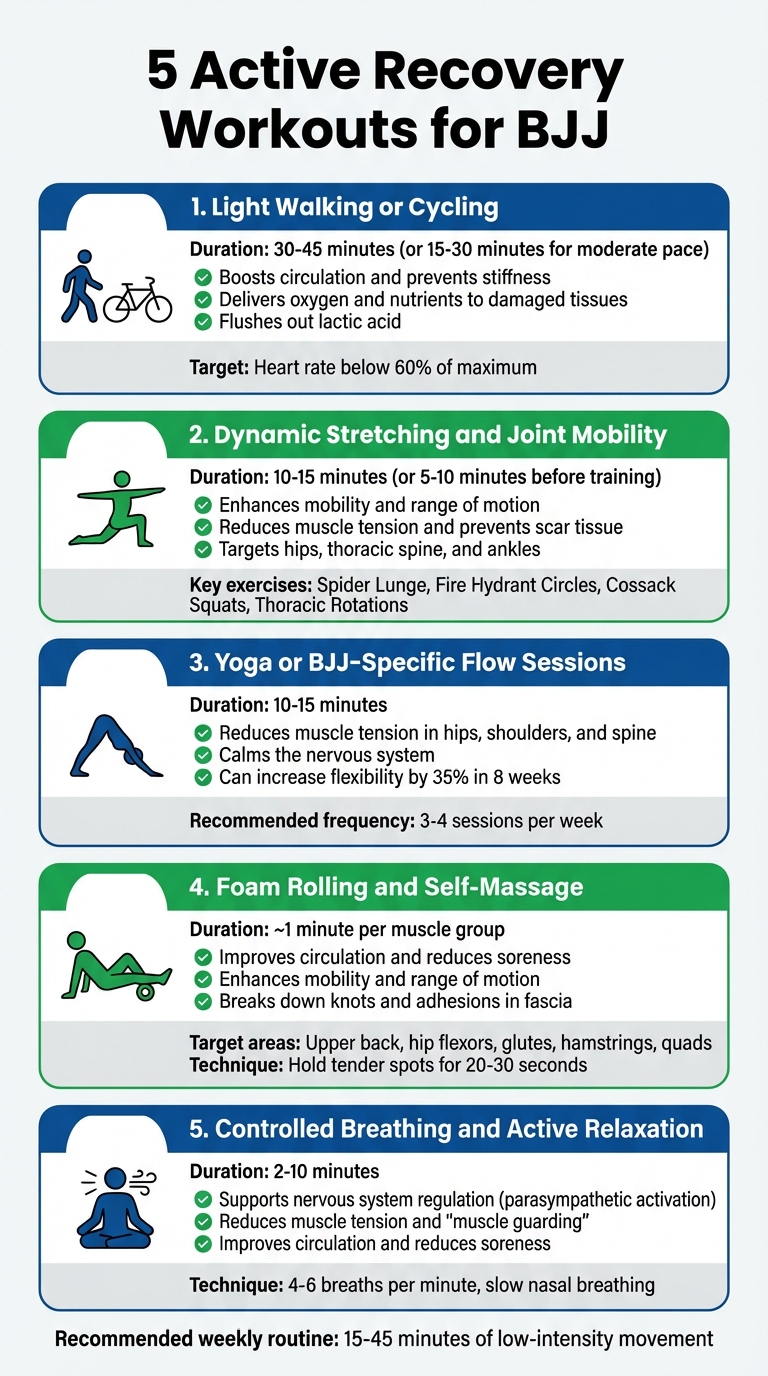
Active recovery is the secret to speeding up your BJJ recovery without overloading your body. Instead of complete rest, low-intensity exercises like walking, stretching, or yoga keep your blood flowing, reduce soreness, and improve flexibility. Here's a quick breakdown of the five best recovery methods:
- Light Walking or Cycling: Boosts circulation and prevents stiffness.
- Dynamic Stretching: Improves mobility and eases tension in key areas like hips and spine.
- Yoga or BJJ-Specific Flow: Loosens tight muscles and calms your nervous system.
- Foam Rolling: Targets sore spots to reduce muscle soreness and improve range of motion.
- Controlled Breathing: Resets your body and reduces muscle tension after sparring.
Each method focuses on keeping your body moving gently, helping you recover faster and stay ready for your next roll.
5 Active Recovery Workouts for BJJ Athletes - Benefits and Duration Guide
MOBILITY // 25 Min BJJ ACTIVE RECOVERY Cardio Mobility Workout (No Equipment)
sbb-itb-d583f1e
1. Light Walking or Stationary Cycling
Spending 30–45 minutes on a walk or an easy bike ride after intense sparring can work wonders for your recovery. It promotes blood flow to sore muscles without adding extra strain to your body [3].
Improves Circulation and Eases Soreness
Moving your legs at a relaxed, conversational pace gently raises your heart rate. This helps deliver oxygen and nutrients to damaged tissues while flushing out metabolic waste, like lactic acid, through lymphatic drainage [2][5]. By keeping your body in motion, you can prevent the stiffness that often sets in after intense rolling sessions [3].
"Active recovery for martial artists means low-stress movement that improves circulation without adding fatigue." - BudoBelly [3]
Light activity not only boosts circulation but also helps release tension from defensive Brazilian Jiu-Jitsu (BJJ) positions. To stay in the optimal recovery zone, aim to keep your heart rate below 60% of its maximum - if you can comfortably hold a conversation, you’re right where you need to be [2].
Loosens Muscles and Supports Recovery
Beyond improving blood flow, walking and cycling can help relax tight muscles and lubricate your joints. These activities are especially effective for easing tightness in your back and hips, areas commonly affected after BJJ [3]. If you are traveling or looking to find a BJJ gym with better recovery facilities, checking local reviews can help. They also encourage the production of synovial fluid, which keeps your joints moving smoothly [6]. Plus, engaging in this type of gentle movement helps your nervous system shift out of the fight-or-flight mode triggered by sparring, allowing your body to focus on actual recovery [3][6].
For best results, stick to 15–30 minutes at a relaxed pace - just enough to break a light sweat without wearing yourself out [1]. If you're indoors, hop on a stationary bike for 5–10 minutes at a low-to-moderate intensity [7].
2. Dynamic Stretching and Joint Mobility
Spending 10–15 minutes on dynamic stretching can speed up recovery after intense training sessions. Unlike static stretching, which involves holding positions, dynamic stretching keeps you actively moving through your full range of motion with strength and control[10]. This method specifically targets key areas for BJJ practitioners, such as the hips, thoracic spine, and ankles[3].
Enhances Mobility and Range of Motion
Dynamic movements like leg swings, hip circles, and Cossack squats do more than just warm up your joints - they prepare your body for the unique demands of grappling. Mobility isn’t just about being flexible; it’s about having the strength and coordination to control your range of motion[12]. As BJJ Champion Lachlan Giles explains:
"If you want the best guard retention, then you should be stretching to make your guard harder to pass..."[10]
Here are some exercises to help sharpen your mobility for BJJ:
| Exercise | Target Area | BJJ Application |
|---|---|---|
| Spider Lunge | Hips/Groin | Improves hip mobility for guard play and passing[12] |
| Fire Hydrant Circles | Hip Joint | Enhances rotational range for triangles and sweeps[11] |
| Cossack Squats | Adductors/Hips | Boosts lateral agility and base stability[11] |
| Thoracic Rotations | Upper Back/Spine | Counters "BJJ hunchback" and improves framing[8][11] |
These exercises help you move more efficiently on the mat, improving guard retention and overall performance. Plus, they pave the way for reducing muscle tension in the next phase of recovery.
Reduces Muscle Tension and Aids Recovery
Dynamic stretching also helps realign warm muscles, preventing small injuries and scar tissue from forming[9]. This is especially useful for addressing "muscle guarding", where your body tightens up protectively after intense rolling sessions[3]. Movements like cat-cow and thread-the-needle are excellent for easing spinal compression and releasing hip tension - common issues for grapplers[3]. Keep your pace slow and steady to avoid triggering muscle guarding and to promote joint lubrication[3]. Adding controlled breathing to these movements enhances their recovery benefits even further.
Supports Nervous System Regulation
Combining controlled breathing with mobility work can help calm your nervous system after the stress of sparring. This activates the parasympathetic system, which reduces soreness and helps your body reset[3]. For optimal results, aim for 5–10 minutes of dynamic stretches before training or dedicate a full 12 minutes to these routines on rest days. This consistency keeps your joints healthy and functioning smoothly[8][9].
3. Yoga or BJJ-Specific Flow Sessions
Spending just 10–15 minutes on yoga or BJJ-specific flow drills can keep you moving without the intensity of full training. This kind of active recovery boosts blood flow, which helps deliver oxygen and nutrients to tired muscles, speeding up their repair process[1]. For BJJ athletes, this isn’t just about recovery - it’s also a chance to improve flexibility and nerve control, which can lead to better guard retention and smoother transitions. As Professional Strength & Conditioning Coach James de Lacey puts it:
"Movement is medicine... By being active, you're promoting blood flow to the working muscles which delivers essential nutrients for recovery."[4]
Reduces Muscle Tension and Speeds Recovery
Yoga is perfect for targeting tension in areas that BJJ practitioners often struggle with, like stiff hips, sore shoulders, and compressed spines. For example, the Pigeon Stretch is great for loosening tight glutes and the piriformis muscle, which is especially helpful for guard players[8]. Meanwhile, poses like the Cobra Pose can help open up the chest and counteract the hunched-over posture caused by constant gripping and framing on the mat[15]. To get the most out of these stretches, try holding each pose for 30–60 seconds after training, when your muscles are already warm[8][13]. Not only will this ease physical tension, but it can also help calm your nervous system.
Calms the Nervous System
Yoga does more than just improve flexibility - it trains your nervous system to stay relaxed, even under pressure. Studies suggest that increasing flexibility helps your nervous system adapt and extend its range of comfort[14]. Poses like Child's Pose or Legs Up The Wall, paired with mindful breathing, can shift your body from a "fight or flight" state to a more relaxed "rest and digest" mode, which is essential for recovery[9][15][17]. Plus, a calm nervous system leads to better performance on the mat.
Improves Mobility and Range of Motion
A regular yoga practice can increase flexibility by as much as 35% in just eight weeks[16]. For BJJ athletes, this means better guard retention, smoother transitions, and fewer injuries. Poses like the Brettzel Stretch can enhance rotational mobility, while the Butterfly Stretch is excellent for improving triangle setups[8][13]. To keep BJJ-related pain at bay and maintain joint health over the long term, aim for 3–4 yoga sessions a week[14]. Even a short, focused routine - say, 12 minutes - can significantly improve your performance on the mat[9].
4. Foam Rolling and Self-Massage
Foam rolling is a practical way to complement dynamic mobility exercises by offering targeted self-massage that helps ease soreness and supports recovery.
This technique, known as self-myofascial release (SMR), uses your body weight to apply pressure to specific muscles and connective tissues. For BJJ practitioners, foam rolling can be particularly helpful in addressing tight hips, sore shoulders, and stiff backs after training sessions[18][21].
Improves Circulation and Reduces Soreness
When you roll over a muscle, the pressure helps break down knots and adhesions in the fascia - the connective tissue that sits between your muscles and skin[18][20]. This action boosts blood and lymphatic flow, which helps clear waste products and supports the repair of muscle fibers[19]. Sustained pressure also activates Golgi tendon organs (GTOs), which send signals to relax the muscles and ease tension[20].
For example, research involving soccer players found that foam rolling after training reduced muscle soreness, helping athletes recover faster and return to training sooner[4]. This improved circulation also supports better joint mobility, making foam rolling a valuable tool for overall recovery.
Enhances Mobility and Range of Motion
Key areas to focus on include the upper back, hip flexors, glutes, hamstrings, and quads - all commonly affected in BJJ[22][23][19]. Spend about a minute rolling each muscle group. If you hit a tender spot or "knot", pause and hold the pressure for 20–30 seconds to allow the muscle to release[18][20].
For instance, when working on your upper back, position the roller under your shoulder blades, support your head with your hands, and roll from your mid-back to shoulders. This can help counteract the rounded posture often developed while playing guard[22][23]. For hip flexors, try a forearm plank position with the roller under one hip, using small, controlled movements to target the area[22][23].
Reduces Muscle Tension and Aids Recovery
Use long, slow strokes rather than quick movements to give your fascia time to respond[18][21]. Pair this with deep breathing to encourage relaxation and further reduce muscle tension[20][21]. As Strength & Conditioning Coach James de Lacey explains:
"Foam rolling and self-massage is a cheap alternative to reduce any muscle pain you may have allowing you to get back to BJJ sooner"[4].
If you're new to foam rolling, start with a softer roller and gradually move to a firmer or textured "rumble" roller as you build tolerance[18][19]. Remember, foam rolling is meant for soft tissue only - avoid rolling directly over bones or joints[22][23].
5. Controlled Breathing and Active Relaxation
After a tough training session, your body remains in an activated state. Controlled breathing is a simple yet powerful way to help your system reset. Just 2 to 10 minutes of slow, deep belly breathing can kickstart your recovery process [24].
Supports Nervous System Regulation
Brazilian Jiu-Jitsu (BJJ) places significant stress on your central nervous system. Controlled breathing helps shift your body into the parasympathetic "rest and digest" mode, where true recovery and adaptation happen. Ideally, aim for a breathing cadence of about 4 to 6 breaths per minute [24]. As noted by Order & Progress:
"Parasympathetic is the 'rest and digest' state of the nervous system, where genuine recovery can occur. Getting into this state is how your body begins the recovery process, and we can do that through the breath." [24]
Focus on slow nasal breathing rather than mouth breathing. Breathing through your nose helps maintain a sense of calm, while mouth breathing might unintentionally trigger a fight-or-flight response [6]. This transition not only soothes your mind but also readies your muscles for deeper relaxation techniques.
Reduces Muscle Tension and Aids Recovery
In addition to calming your nervous system, controlled breathing plays a direct role in reducing muscle tension. Deep, diaphragmatic breaths help relax tight muscles and clear metabolic waste from your bloodstream [24]. This can be especially helpful for easing "muscle guarding" - the protective tightness muscles often hold after intense activity [3]. For grapplers, areas like tight hip flexors and a strained lower back often benefit the most from this method.
To enhance the effect, try positions such as "Legs Up The Wall", "Static Back", or a slow "Inverted Rockback." These positions promote circulation and help decompress heavily worked muscle groups [25].
Improves Circulation and Reduces Soreness
Controlled breathing also improves blood flow, delivering much-needed oxygen and nutrients to damaged tissues while flushing out waste products that contribute to muscle fatigue [24][25]. By incorporating these techniques into your cool-down routine, you can boost circulation, reduce soreness, and recover faster - keeping you primed for your next training session.
Conclusion
Active recovery offers more than just relief from soreness. By enhancing circulation and delivering nutrients to muscles, it accelerates tissue repair, helping you get back on the mats sooner and with more energy.
But the benefits don’t stop there. These techniques also play a key role in injury prevention. They keep joints lubricated and muscles flexible, especially in high-stress areas like the hips, thoracic spine, and ankles - regions that endure significant strain during grappling. As BudoBelly puts it:
"Active recovery isn't about 'doing more'. Instead, it's about facilitating adaptation."
By preventing muscle stiffness and joint compression, you lower the risk of strains and overuse injuries that could derail your progress. This approach not only protects your body but also helps extend your time in the sport.
Active recovery also supports long-term performance. Instead of pushing through fatigue, these practices reset your nervous system and prepare your body to handle the demands of Brazilian Jiu-Jitsu. As Professional Strength & Conditioning Coach James de Lacey wisely states:
"Movement is medicine."
If you're interested in finding local academies that incorporate recovery-focused classes - like yoga, mobility sessions, or flow drills - the Brazilian Jiu-Jitsu Gyms Directory (https://bjjacademyfinder.com) is a great resource. It provides details about programs, instructor qualifications, and user reviews, making it easier to find gyms that balance tough training with smart recovery practices.
Adding just 15–45 minutes of low-intensity movement to your weekly routine can make a noticeable difference in your BJJ performance and overall well-being.
FAQs
How do I know if my recovery workout is too intense?
When doing recovery workouts, listen closely to what your body is telling you. If you're dealing with ongoing soreness, overwhelming fatigue, or increased stiffness, it might mean you're pushing too hard. Recovery sessions are meant to be gentle and rejuvenating - not exhausting. If you find yourself feeling wiped out or struggling with everyday tasks afterward, it's time to dial back the intensity. The goal is to help your muscles heal, not to add extra strain.
When should I use stretching vs foam rolling after BJJ?
Incorporating static stretching after your workout can help boost flexibility and ease muscle soreness. To do it right, hold each stretch for 15-60 seconds to allow your muscles to properly relax and lengthen. However, avoid static stretching before exercise - it can temporarily decrease your strength, which isn’t ideal before training.
On the other hand, foam rolling works wonders post-training or on active recovery days. It helps release muscle tension, promotes better blood flow, and supports mobility. Think of it as a self-massage that keeps your muscles feeling loose and ready for action.
These two techniques work well together, making them great additions to any recovery plan.
What breathing technique helps me recover fastest after sparring?
The quickest way to recover after sparring is through slow, deep breathing. Spending just 2–10 minutes focusing on controlled, deep breaths can help you relax, lower stress levels, and boost recovery by increasing oxygen flow and soothing your nervous system. This straightforward technique works with your body to aid the recovery process naturally.
Related articles
Share this article