
How to Deal with Aggressive Training Partners
Identify red flags, set boundaries, use technical defense, and involve your coach when needed to stay safe and grow from tough rolls.
Written by BJJ Academy Finder Editorial Team
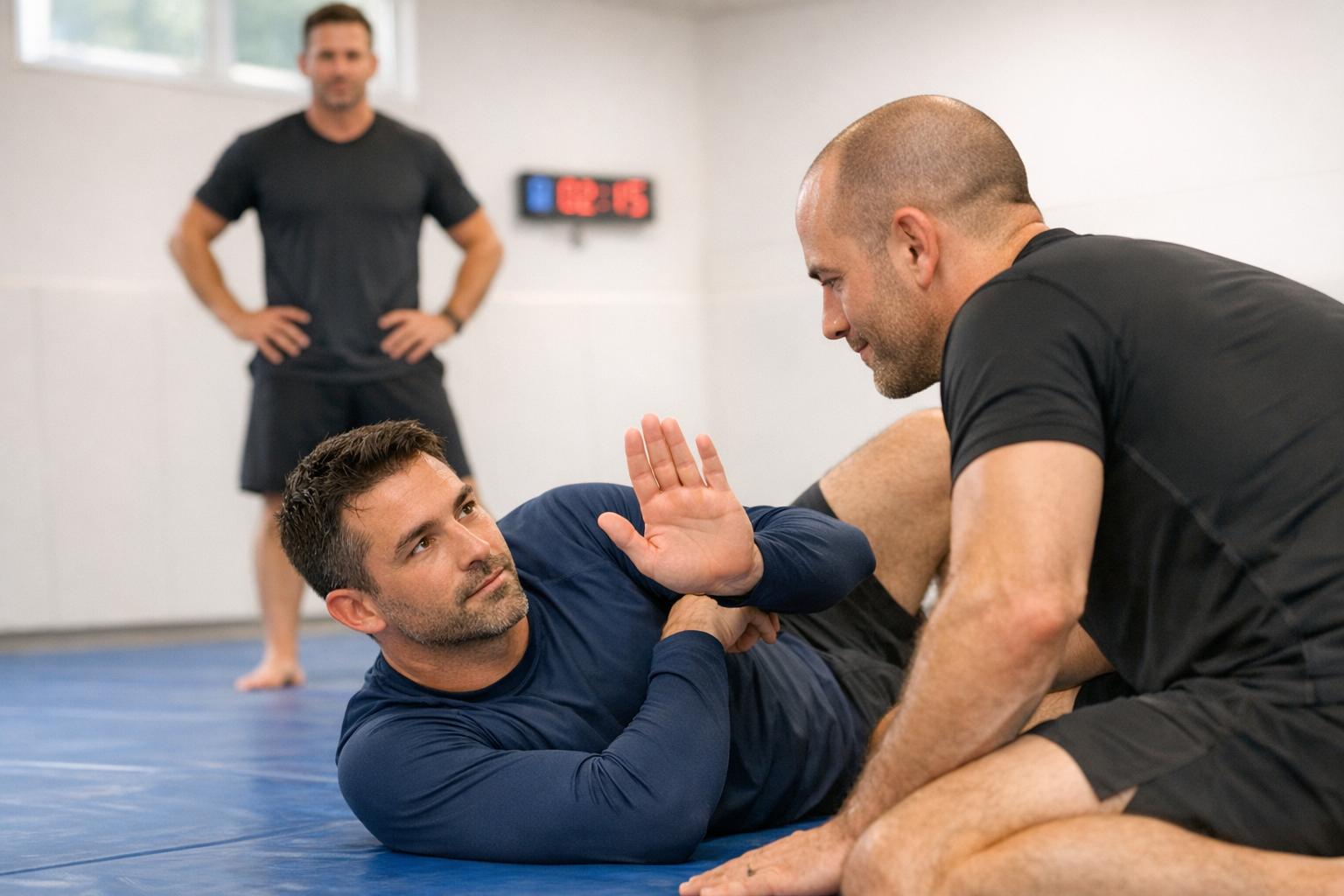
How to Deal with Aggressive Training Partners
When training in Brazilian Jiu-Jitsu, dealing with overly aggressive partners can be risky and frustrating. Unsafe behavior, such as ignoring taps or using excessive force, can lead to injuries and create a tense gym environment. Here’s what you need to know:
- Spot the Warning Signs: Cranking submissions, uncontrolled movements, and competition-level intensity during practice are red flags.
- Prioritize Safety: Tap early, use strong defensive techniques, and don’t hesitate to stop rolls if you feel unsafe.
- Communicate Clearly: Set expectations upfront, provide feedback after rolls, and involve your coach if needed.
- Choose Partners Wisely: Train with people who respect boundaries and match your goals.
- Turn Challenges into Growth: Use tough rolls to refine your techniques and build mental resilience.
Your safety is the most important factor. If someone’s behavior doesn’t improve, it’s okay to decline future rolls or seek support from your instructor or find a new BJJ gym that better suits your needs. Always prioritize respectful and controlled training.
How to Deal With Aggressive BJJ Beginners (As A Beginner) | Ep. 23
sbb-itb-d583f1e
How to Identify Unsafe Aggression
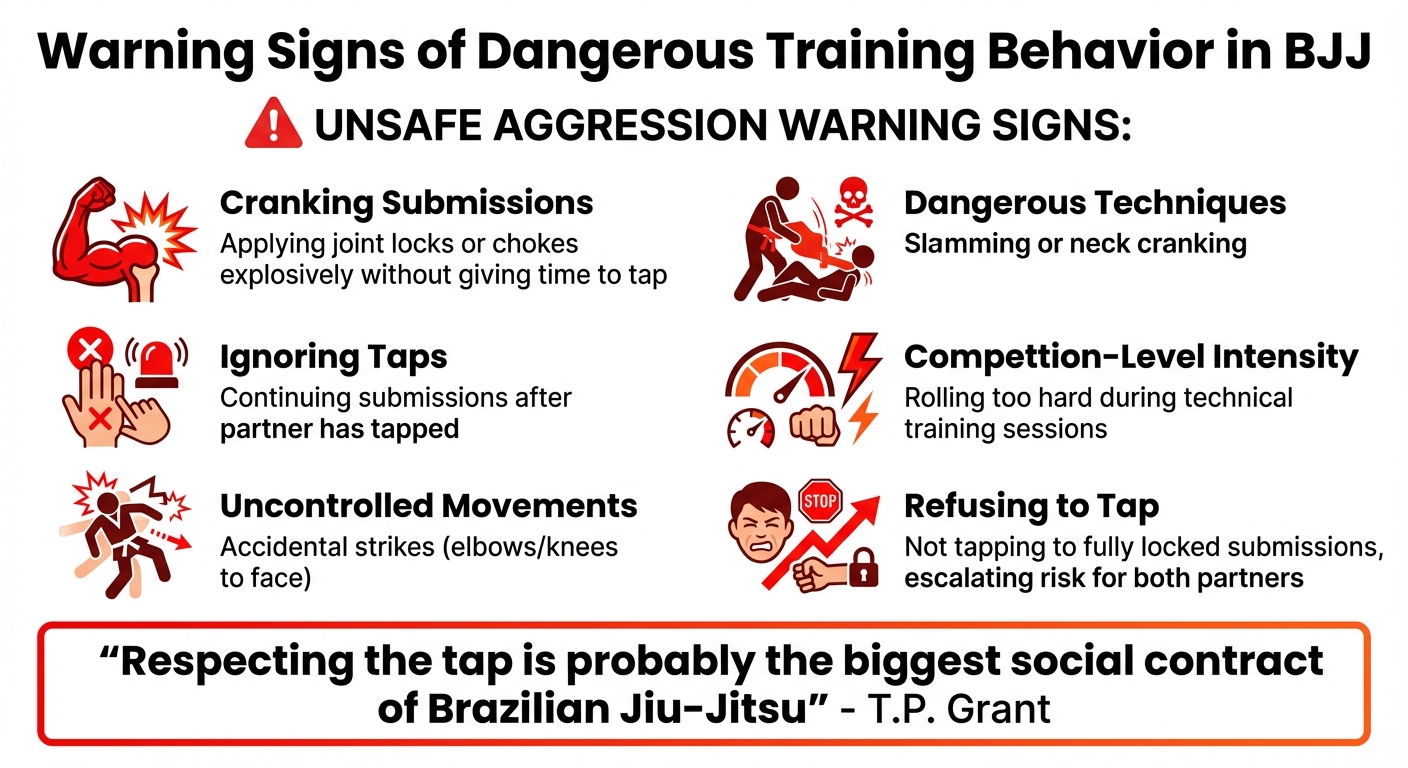
Warning Signs of Aggressive BJJ Training Partners
In Brazilian Jiu-Jitsu (BJJ), controlled intensity is all about deliberate movements, gradual submissions, and a shared focus on safety. On the flip side, unsafe aggression is marked by frantic, uncontrolled actions where winning takes priority over protecting both practitioners.
A good training partner prioritizes the well-being of everyone involved. But an overly aggressive partner often gets "tunnel vision", obsessing over dominating a position or finishing a submission while ignoring safety. As grappling expert T.P. Grant puts it:
"Respecting the tap is probably the biggest social contract of Brazilian Jiu-Jitsu" [9].
Warning Signs of Dangerous Behavior
Certain behaviors are clear indicators that a partner has crossed the line into unsafe territory. One of the biggest red flags? Cranking submissions - applying joint locks or chokes explosively instead of giving your partner time to tap [4] [11]. A famous example involves Brazilian MMA fighter Rousimar "Toquinho" Palhares, who locked in a kimura on Jake Shields. Even after Shields tapped and the referee stepped in, Palhares continued to crank the submission [9].
Other warning signs include:
- Ignoring taps or continuing submissions after a tap.
- Uncontrolled movements that lead to accidental strikes, like elbows or knees to the face.
- Using dangerous techniques such as slamming or neck cranking.
- Rolling with an intensity more suited to a competition than a technical training session.
- Refusing to tap to fully locked submissions, which can escalate risks for both partners [1] [3] [5] [7].
Spotting these behaviors is crucial because they can lead to serious physical harm and mental strain.
Risks of Training with Aggressive Partners
Unsafe training partners can cause injuries that range from minor to severe. Joint hyperextensions, muscle strains, and accidental strikes can sideline you for weeks - or even months [5] [7] [10]. For example, in May 2021, a practitioner sustained an accidental elbow to the knee during a roll, forcing them to take a two-week break from training [7].
The mental impact is just as damaging. Training with overly aggressive partners can create stress and intimidation, which can sap your enthusiasm for the sport [4] [5]. As BJJ black belt Masafumi Matsumoto wisely said:
"If you get injured and your injury stops you from training, that will be a real bummer... It's much better than getting injured. Think about it. Which one would you prefer - getting injured and unable to train for a month or two (or more), or tapping as many times you need to?" [5].
Unchecked aggression can also lead to a toxic training environment. When one person uses excessive force, others may retaliate, creating a cycle of escalating intensity. This not only increases the likelihood of injuries but can also make training so uncomfortable that people avoid certain partners - or quit altogether [7] [11]. Ultimately, this kind of behavior hurts both individual progress and the overall health of the gym community.
How to Manage Aggressive Training Partners
Once you've recognized unsafe aggression in training, the next step is figuring out how to handle it without escalating the situation or risking injury. Managing these intense rolls requires a mix of technical skills, clear communication, and smart pacing. The goal? Protect yourself while keeping the session productive.
Stay Composed and Focus on Technical Defense
Your mindset can shape the entire roll. When faced with an aggressive partner, don’t let frustration or irritation take over. Reacting emotionally often makes things worse. As BJJEE points out:
"Showing frustration or irritation can escalate the situation, whereas staying compose can have a calming effect on your partner." [12]
Avoid the temptation to match their intensity. Masafumi Matsumoto emphasizes that you don’t need to move as fast as an overly aggressive partner [5]. Instead, rely on strong technical defense. Use frames, guard retention, and controlled movements to neutralize their unpredictability. Establishing dominant grips and positions early can help you dictate the pace. And if control slips, don’t hesitate to tap early - it’s better to stay safe than risk injury.
Communicate Boundaries Clearly
Many aggressive training partners, especially newer ones, might not even realize how rough they’re being. That’s why communication is key. Before the roll, set expectations by saying something like, “I’m nursing an injury; let’s keep it technical.” During the roll, use short cues like “slow down” or “keep it technical” to reset the pace. Afterward, give specific feedback, pointing out actions like uncontrolled weight drops or accidental strikes so they can adjust.
If these conversations don’t lead to safer rolls, it’s okay to decline future training sessions with that person. Protecting yourself is always a priority.
Control the Training Pace
You can also manage aggression by making technical adjustments that naturally slow your partner down. Secure solid grips and stay close to limit their space and momentum. Guards like closed guard, half guard, or X-guard are particularly effective at restricting mobility.
Applying constant weight and maintaining dominant positions can drain your partner’s energy. Masafumi Matsumoto advises:
"My advice to you is very, very simple: Stay safe, slow him down, and use sparring with him as an opportunity to practice specific techniques/positions." [5]
Evolve University highlights the effectiveness of the knee on belly position:
"One of the best ways to wear down an aggressive opponent is to pin them using the knee on belly (KOB). Not only does the KOB drain the opponent's energy, which will slow down their pace, it is also a means for you to rest." [6]
When to Talk to Your Coach or Change Partners
Your safety is the top priority. If clear communication hasn’t resolved an issue, you have two choices: involve your coach or seek out training partners who prioritize controlled and respectful practice. If you’ve already tried setting boundaries and nothing has changed, it’s time to bring the matter to your instructor’s attention. This isn’t about complaining - it’s about ensuring a safe and positive training environment for everyone.
How to Approach Your Instructor
Timing is key when discussing safety concerns with your coach. Avoid bringing up issues immediately after a frustrating roll; instead, wait until emotions have settled and approach them discreetly, either before or after class.
When you do speak to your coach, focus on problem-solving rather than assigning blame. Valerie Worthington, a BJJ black belt, offers this advice:
"Talk to your coach in the spirit of problem-solving; you are not the first person to experience this, and you will not be the last." [13]
Start by asking general questions about how they handle overly aggressive behavior. This approach opens the door to a broader discussion about gym safety without immediately singling anyone out. If the issue persists, use specific examples and "I" statements, like "I felt unsafe during that scramble", to keep the conversation factual. If injuries have occurred, make sure to mention them. As Dion Mendel, a BJJ blogger, explains:
"Injuries are a warning sign that something is wrong with the gym culture and your coach needs to know about this to fix it." [16]
It can also help to confirm your concerns with other students. If others have experienced similar issues, it shows that the problem isn’t just personal preference. Rachel Dows, a blue belt and writer, highlights this point:
"Your coach should always want to know what's going on, and a candid conversation may go a long way." [2]
Coaches need to be aware of overly aggressive training partners because such behavior can discourage newer students from continuing. If these discussions don’t lead to safer rolls, it might be time to reconsider who you train with.
Finding Training Partners Who Match Your Goals
If coaching interventions don’t resolve the issue, it’s essential to choose training partners who align with your safety and goals. Not every partner will be the right fit, and that’s okay. The best partners are those who show respect, maintain control, and approach training as a learning process rather than a competition.
For beginners, training with upper belts can be a safer option. More experienced practitioners are often better at adjusting their intensity to match your level while still providing a challenge. Pay attention during warm-ups and drills to identify partners who follow instructions and treat others respectfully. Look for people who ask about injuries and openly discuss training goals. If you’re unsure, ask your coach for recommendations on who might be a good fit for your skill level and objectives.
Before rolling, communicate your goals clearly. For example, you might say, "I’m looking for a technical, relaxed roll", or "I’m preparing for a competition and want to go harder." As one practitioner wisely notes:
"The best compliment in jiu-jitsu isn't 'you're really good.' It's 'I always learn something when I roll with you'." [15]
Trust your instincts. If a potential partner feels unsafe or doesn’t match your training needs, it’s okay to decline. You can simply say, "No thanks, I’m resting this one", or "I’m going to work with someone else today." Your safety should always come first.
If you’re searching for a gym that prioritizes these values, know that many academies emphasize safety and respect as core principles. To find a reputable academy near you, check out the Brazilian Jiu-Jitsu Gyms Directory, a resource connecting martial artists with trusted training environments across the United States.
Using Difficult Rolls to Improve Your Skills
Safety always comes first, but rolling with aggressive, challenging partners can be a game-changer for your growth. Think of these intense sessions as a way to test your techniques under real pressure.
Tom DeBlass, a seasoned black belt and gym owner, puts it perfectly:
"That person you dread training with. The toughest, roughest, strongest roll in the room. That is the person you should train with the most. Why? Because it is uncomfortable. Competition is uncomfortable." [17]
That discomfort? It’s what prepares you for high-pressure moments, whether it’s a tournament or a real-life confrontation. Consistently choosing tough partners can make competition feel less intimidating and more like just another day on the mats. Let’s dive into how these rolls can sharpen your defense and build mental resilience.
Improving Your Defense Under Pressure
Training with aggressive partners pushes your defensive skills to the limit. Their intensity forces you to refine techniques like guard retention and escapes while staying composed under pressure. Instead of relying on brute strength, these rolls help you develop technical precision and efficiency.
Here’s one approach: try constraint training. Let your partner pass your guard intentionally, then work on escaping tough positions like side control or mount. This focused practice builds confidence in your ability to recover even when things aren’t going your way. To counter raw aggression, close the distance with solid grips and control the pace using dominant positions like a strong closed guard or Knee on Belly. [6] And don’t forget - when your opponent overcommits, it’s the perfect moment to execute sweeps or takedowns by redirecting their momentum.
These rolls don’t just improve your physical defense - they also strengthen your mental game, preparing you for the challenges of high-stakes situations.
Developing Mental Toughness
Rolling with aggressive partners isn’t just about technique - it’s also about staying calm when the pressure is on. Mental toughness is key, whether you’re competing or facing challenges off the mats. A practitioner from The Garden MMA explains it well:
"I can tell how long someone has been training by what happens when they get put in a bad spot. New people hold their breath and thrash. Experienced people exhale and move methodically." [15]
The secret? Control your breathing. When stuck in a bad position, exhaling slowly helps you stay composed and keeps panic at bay. It also conserves energy, which is critical in tough rolls.
Want to push your limits even further? Seek out challenging rolls when you’re already tired - like during the last few minutes of a session. This mimics the exhaustion you’ll feel in the final moments of competition and tests your ability to stay sharp under fatigue. [3] Keep in mind the principle: "Slow is smooth, smooth is fast." [15] Rushing leads to mistakes, so focus on moving with precision and purpose, even when the intensity ramps up. This kind of patience and control will serve you well when it counts the most.
Conclusion
Dealing with aggressive training partners is an inevitable part of the Brazilian Jiu-Jitsu journey, but your safety should always come first. It's important to remember that you’re never obligated to roll with someone if you feel unsafe [1][2]. As Rachel Dows, a blue belt and writer, wisely points out:
"Your safety is paramount. There is nothing to be gained from a tough guy act – that will only end up with you spiked on your head and nursing neck pain for the next month." [2]
The strategies shared in this guide - such as spotting warning signs, setting clear boundaries, using technical defense to control the pace, and involving your coach when needed - offer a solid framework for handling these situations with confidence. And if communication doesn’t work or a partner continues to act recklessly, you’re fully within your rights to decline the roll [2][8]. Prioritizing your well-being while fostering a respectful gym culture benefits everyone on the mats.
That said, challenging rolls can also be valuable learning experiences. Masafumi Matsumoto, a BJJ black belt, puts it best: "Turn everything into opportunities to improve your game, and your game will improve for sure." [5] When handled safely and with the right mindset, training with aggressive partners can strengthen your defense, build mental resilience, and better prepare you for high-pressure scenarios.
The secret lies in balance. Tap early and often to avoid injuries [5], communicate openly with both partners and instructors [14], and focus on creating an atmosphere of mutual respect. When you grow as a practitioner, your training partners grow too - helping the entire gym thrive [14].
FAQs
How do I say no to a roll without drama?
If you need to decline a roll, it’s important to focus on your safety and communicate respectfully. You can politely explain that you’re uncomfortable or prefer not to train with someone who tends to be overly aggressive. It’s also completely acceptable to pass if you feel unsafe - most instructors understand that you’re not required to roll with someone who might put you at risk of injury. Staying clear and respectful in your communication can help avoid unnecessary conflict.
What should I do if someone ignores my tap?
If someone doesn't respect your tap during Brazilian Jiu-Jitsu training, it’s important to address the issue calmly. Start by having a conversation with them about why honoring the tap is crucial for safety and building trust. If the problem persists, bring it to your coach's attention so they can handle the situation. Respecting the tap is a fundamental part of keeping everyone safe and fostering mutual respect on the mats.
When is it time to switch gyms for safety?
If your training partners often display aggressive or reckless behavior, and this continues even after you've voiced your concerns, it might be time to look for a new gym. Feeling unsafe during sessions or having your requests for more controlled, safer training ignored can hinder both your progress and overall well-being. Seek out a gym that fosters a supportive and controlled environment - your safety should always come first.
Related articles
Share this article