
Study: Heat Therapy Speeds Up BJJ Recovery
Heat therapy increases blood flow, reduces muscle stiffness and soreness, and speeds BJJ recovery—best applied 24–48 hours after intense training.
Written by BJJ Academy Finder Editorial Team
Study: Heat Therapy Speeds Up BJJ Recovery
Heat therapy can help Brazilian Jiu-Jitsu (BJJ) athletes recover faster by improving blood flow, reducing muscle stiffness, and alleviating soreness. Research shows that applying heat after intense training increases circulation by up to six times, delivering nutrients to damaged tissues and aiding in recovery. It also helps relax tight muscles, making it easier to return to training.
Key points:
- When to use heat therapy: Best applied 24–48 hours after training to address soreness and stiffness. Avoid using on fresh injuries with swelling.
- Methods: Options include hot packs, saunas, hot baths, and heated foam rollers.
- Benefits: Increases blood flow, reduces muscle tension, and supports tissue repair.
Cold therapy, by contrast, is better for acute injuries and inflammation within the first 24 hours post-training. For a balanced recovery approach, contrast therapy (alternating heat and cold) can be effective.
For BJJ athletes, incorporating heat therapy into recovery routines can help maintain strength and flexibility while reducing downtime.
What Recent Studies Show About Heat Therapy
How the Studies Were Conducted
A randomized clinical trial at the Provita Medical Center in Poland involved 40 combat sports athletes to evaluate the effects of different recovery methods. Led by Robert Trybulski, the study compared three approaches: 20-minute sessions of heat compression (113°F), cold compression (37°F), and contrast therapy [7]. The team used the Game Ready system to deliver heat-compression therapy with intermittent cyclic compression (5–25 mmHg) [6].
To measure recovery, researchers relied on advanced tools: laser Doppler flowmetry for tissue perfusion, MyotonPRO devices for muscle stiffness, and electronic dynamometers for strength testing. Participants, who had 3–5 years of training experience, followed fatigue protocols mimicking grappling sessions. These protocols involved maintaining 60% of their maximum voluntary contraction in 5-second cycles. This detailed methodology ensured accurate and measurable results.
Main Results from Heat Therapy Research
Heat therapy proved far more effective than cold therapy in promoting muscle relaxation. Muscle tone measurements showed the heat therapy group achieved values of 18.61 ± 0.21 Hz, compared to 20.08 ± 0.19 Hz in the cold therapy group immediately after treatment [7]. This highlights heat therapy’s superior ability to reduce muscle tension and stiffness.
"Heat-Compression-Therapy... significantly affects recovery of muscle biomechanical parameters, pain threshold, strength, tissue perfusion, and temperature." – Applied Sciences [6]
The benefits extended beyond muscle relaxation. Tissue perfusion values in the heat-compression group reached 19.45 ± 0.91 perfusion units (PU), compared to just 9.79 ± 0.35 PU in control groups [5]. A May 2023 pilot study involving 20 male MMA fighters further reinforced these findings. It demonstrated that just 5 minutes of heat-compression therapy at 113°F significantly improved muscle tone, stiffness, and pain thresholds [6].
For longer-term results, applying local heat therapy for 90 minutes daily over five days sped up functional recovery after muscle damage. Chronic use over eight weeks even boosted maximal muscle strength by 5% to 6% [4].
How Heat Therapy Affects the Body
Better Blood Flow and Nutrient Delivery
Applying heat after a workout can significantly boost blood flow by causing vasodilation. When muscle temperatures rise to between 107.6°F and 112.1°F, blood flow can increase by 1.5 to 6 times the normal rate [2]. This happens because heat activates eNOS, which triggers the release of nitric oxide, and prompts red blood cells to release ATP, further improving circulation [2].
"Heat-induced increases in intramuscular temperature and the consequent elevation in muscle blood flow initiate a cascade of events that culminate with improved replenishment of the muscle energy stores." – Bruno T. Roseguini, Ph.D., Purdue University [2]
This improved circulation plays a big role in recovery. It delivers essential nutrients like glucose and amino acids directly to damaged muscle fibers, aiding protein synthesis and tissue repair. At the same time, it helps flush out metabolic waste and inflammatory substances, such as nerve growth factor, which can irritate pain receptors and contribute to soreness [3, 14]. Interestingly, heat has also been shown to lower muscle sympathetic nerve activity by about 43% [2]. This combination of better nutrient delivery and waste removal not only supports muscle recovery but also helps reduce pain and promote relaxation.
Muscle Relaxation and Pain Relief
Heat therapy doesn’t just enhance blood flow - it also works wonders for muscle relaxation. By increasing tissue temperature, it improves the flexibility of muscles and connective tissues, like fascia, making them less stiff and more pliable [8]. This can be particularly helpful after intense workouts. For instance, studies showed that athletes using heat therapy after exercise experienced only a 4% strength loss, compared to a 24% loss in those who skipped treatment [9].
"Heat increases the pliability of your muscles and connective tissues, like fascia. This makes it a perfect prelude to stretching or mobility work." – Ben Lowe, Speediance [8]
Heat also activates the parasympathetic nervous system, which plays a key role in recovery [3]. Additionally, the rise in temperature boosts local metabolic activity and mitochondrial function, both of which are crucial for muscle repair and glycogen replenishment [2]. This is especially beneficial for Brazilian Jiu-Jitsu (BJJ) athletes, as the sport’s grappling movements often involve eccentric contractions that can lead to micro-tears and delayed onset muscle soreness [2].
Heat Therapy vs. Cold Therapy for BJJ Recovery
Heat vs Cold Therapy for BJJ Recovery: When to Use Each Method
When to Use Each Method
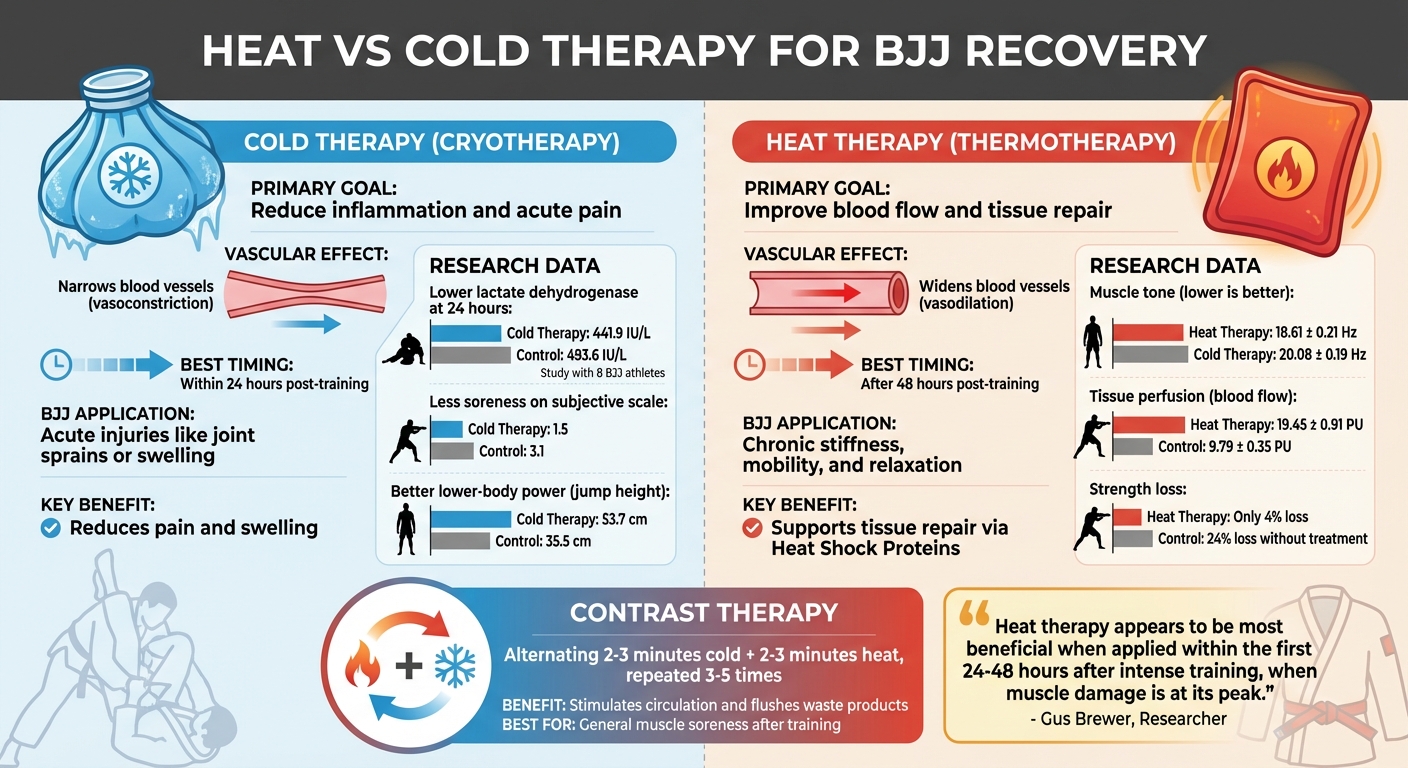
Cold therapy is ideal right after training. Applying cold within the first 24 hours can help control acute inflammation and swelling [12][3]. This makes it especially helpful for injuries like sprains or joint trauma that occur during training.
Heat therapy becomes more effective after the first day. Once 24 to 48 hours have passed, heat can address lingering muscle stiffness and soreness [12]. By this time, the initial inflammation has usually decreased, and the focus shifts to improving blood flow. Heat widens blood vessels (vasodilation), increasing circulation to bring nutrients to damaged tissues and support recovery.
"Heat therapy appears to be most beneficial when applied within the first 24-48 hours after intense training, when muscle damage is at its peak." – Gus Brewer, Researcher [12]
Contrast therapy combines cold and heat for a balanced approach. Alternating between cold and heat can stimulate circulation and help flush out waste products from muscles [3]. A common method is 2–3 minutes of cold followed by 2–3 minutes of heat, repeated 3–5 times. This technique is useful for general muscle soreness after training.
These strategies allow BJJ athletes to recover more effectively by managing inflammation and promoting tissue repair. Below is a table highlighting the differences between cold and heat therapy.
Heat vs. Cold Therapy Comparison
Here’s a quick comparison of the key aspects of cold and heat therapies:
| Feature | Cold Therapy (Cryotherapy) | Heat Therapy (Thermotherapy) |
|---|---|---|
| Primary Goal | Reduce inflammation and acute pain [12][3] | Improve blood flow and tissue repair [12] |
| Vascular Effect | Narrows blood vessels (vasoconstriction) [12] | Widens blood vessels (vasodilation) [12] |
| Best Timing | Within 24 hours post-training [12][3] | After 48 hours post-training [12] |
| BJJ Application | Acute injuries like joint sprains or swelling [3] | Chronic stiffness, mobility, and relaxation [3] |
| Key Benefit | Reduces pain and swelling [12] | Supports tissue repair via Heat Shock Proteins [12] |
A 2016 study conducted at the Federal University of Sergipe in Brazil tested cold-water immersion on 8 well-trained male BJJ athletes. These athletes immersed themselves in 43°F (6°C) water for 19 minutes after a combat simulation. Compared to the control group, the cold therapy group showed lower lactate dehydrogenase levels (441.9 IU/L vs. 493.6 IU/L) at 24 hours post-recovery, indicating reduced muscle damage [13]. They also reported less soreness (1.5 vs. 3.1 on a subjective scale) and maintained better lower-body power, with jump heights of 53.7 cm compared to 35.5 cm in the control group [13].
sbb-itb-d583f1e
How to Use Heat Therapy for BJJ Recovery
Heat Therapy Methods and Techniques
For Brazilian Jiu-Jitsu (BJJ) athletes, heat therapy offers a variety of options to aid recovery. Among the simplest are hot packs and heating pads. Set them to a temperature of 104–113°F (40–45°C) and apply them to areas like the neck, lower back, or shoulders for 15–20 minutes. Always wrap the pack in a towel to prevent burns [16][17][18].
Traditional saunas are another effective option, operating at 176–194°F (80–90°C). Sessions should last 15–30 minutes, but beginners should start with shorter durations [16][10]. If you prefer a gentler option, infrared saunas are a great alternative. They work at lower temperatures (113–122°F or 45–50°C) while allowing the infrared light to penetrate deeper into muscle tissue. These sessions can last 20–30 minutes, offering a more tolerable experience [16][10].
For a full-body approach, try hot water immersion. A soak in a hot tub at 95–113°F (35–45°C) for 15–20 minutes helps alleviate delayed-onset muscle soreness (DOMS) while promoting relaxation. Studies show that consistent warm baths can reduce pain by nearly 50% for those with chronic joint issues [16].
Another option is heated foam rolling, which combines heat with the benefits of myofascial release. Use a heated foam roller on major muscle groups for 30–60 seconds. This technique improves blood flow and breaks down fascial adhesions, making it especially useful for grip-heavy muscles like the forearms or for the posterior chain muscles essential in guard work [14].
"When you warm up a sore joint or tired muscle, your blood vessels get bigger. This allows more blood, oxygen, and nutrients to be delivered to the injured tissues. Better circulation means more relaxation for those stiff muscles and joints." – Carolyn Sayre, Author [16]
Timing and Frequency Guidelines
To get the most out of heat therapy, timing is key. Apply heat within the first hour after training to maximize blood flow and recovery [14][9][16]. Research highlights that athletes who used heat therapy immediately after exercise experienced only a 4% loss in strength, compared to a 24% loss when no recovery method was used [9].
Consistency matters too. Aim to apply heat therapy 3–4 times per week to support recovery without overdoing it [15]. For issues like chronic stiffness or soreness, wait 48–72 hours post-training before applying heat [16][18].
One critical rule: never apply heat to fresh injuries with active swelling or bruising. Heat can worsen inflammation by dilating blood vessels, so wait at least 48–72 hours before transitioning from cold to heat therapy [16][18][19].
Finally, hydration is essential. Saunas and hot tubs can lead to significant fluid loss through sweating, and dehydration can hinder recovery. Drink plenty of water throughout the day, especially on training days or when using heat therapy methods [16][3][11].
| Method | Temperature | Duration | Best For |
|---|---|---|---|
| Hot Pack / Pad | 104–113°F (40–45°C) | 15–20 minutes | Targeted muscle stiffness |
| Traditional Sauna | 176–194°F (80–90°C) | 15–30 minutes | Full-body recovery, endurance |
| Infrared Sauna | 113–122°F (45–50°C) | 20–30 minutes | Deep tissue recovery |
| Hot Water Immersion | 95–113°F (35–45°C) | 15–20 minutes | DOMS reduction |
| Heated Foam Rolling | N/A | 30–60 seconds per muscle | Breaking down adhesions |
These heat therapy techniques are tailored to the specific recovery needs of BJJ athletes, aligning with scientific research on their benefits. By incorporating these methods into your routine, you can help your body recover more effectively after intense training sessions.
Summary
Heat Therapy Benefits for BJJ Athletes
Heat therapy can play a game-changing role in recovery for Brazilian Jiu-Jitsu athletes. Research highlights that it boosts tissue perfusion significantly, with levels reaching 19.45 ± 0.91 PU compared to just 9.79 ± 0.35 PU in control groups [5]. This improved blood flow brings much-needed oxygen and nutrients to injured muscles while helping to flush out metabolic byproducts like lactate.
Beyond circulation, heat therapy works wonders for reducing muscle stiffness, enhancing flexibility, and easing delayed-onset muscle soreness (DOMS). In an 8-week study, participants who used heat therapy for 90 minutes daily saw a muscle strength increase of 7.8 ± 10.2 Nm, far outpacing the 1.8 ± 9.7 Nm gain observed in those without treatment [4]. It also triggers the production of Heat Shock Proteins (HSPs), which help protect cells under stress and repair damaged proteins [14].
Unlike cold therapy, which might hinder long-term muscle adaptations, heat therapy actively supports muscle growth and strength development [1][2]. To get the most out of it, applying heat soon after training is ideal. Staying hydrated during these sessions is equally important [14]. Whether you prefer hot packs, saunas, or hot water immersion, the key to success is maintaining a consistent recovery routine.
Find a BJJ Academy Near You
Recovery is a crucial part of any athlete’s journey, and integrating effective strategies like heat therapy into your routine can make a noticeable difference in your performance on the mats.
Finding the right academy is just as important. A top-tier gym not only offers expert instruction but also provides valuable advice on recovery techniques to keep you training consistently. To explore academies across the United States, check out the Brazilian Jiu-Jitsu Gyms Directory (https://bjjacademyfinder.com). This resource includes detailed program descriptions, instructor credentials, and user reviews to help you find the perfect fit for your BJJ journey.
FAQs
How hot is too hot for heat therapy?
Heat therapy may become uncomfortable or counterproductive when temperatures rise above 68°F. The ideal range for recovery generally falls between 65°F and 68°F. Exceeding this range can lead to discomfort and may interfere with muscle relaxation. To achieve the best results, it's important to maintain the temperature within this recommended range.
Can heat therapy worsen an injury?
Yes, using heat therapy on damaged or infected tissues can make an injury worse. Heat can increase inflammation, intensify pain, or even slow down the healing process in such cases. If you're uncertain whether heat therapy is suitable for your injury, it's best to consult a healthcare professional for guidance.
What’s the best heat-and-cold contrast routine after BJJ?
Research indicates that combining heat therapy with cold immersion can be an effective way to recover after BJJ training. A typical approach involves starting with 3–5 minutes of heat - such as using warm packs or taking a hot shower - to improve blood flow. This is followed by 10–15 minutes of cold water immersion (at around 50–59°F) to help minimize soreness and inflammation. For the best results, you can repeat this process 1–2 times, depending on how much you can tolerate.
Related articles
Share this article